


Research significance : Artificial intelligence (AI) research is transformative, driving advancements in technology, society, and the economy. It fosters innovation in areas like automation, robotics, and data analysis, enabling more efficient systems and unlocking new possibilities. In healthcare, AI enhances diagnostics, personalizes treatments, and accelerates drug discovery, while in education, it provides adaptive learning tailored to individual needs. Economically, AI boosts productivity, creates new markets, and improves decision-making through data-driven insights. It also discusses global concerns including food security, public health, and climate change. can be addressed by enhancing and streamlining solutions and predictive modeling. AI research raises important ethical and philosophical questions, ensuring fairness, transparency, and responsible use. Additionally, it strengthens national and global security through advancements in defense and cybersecurity. Beyond practical applications, AI deepens our understanding of cognition and expands exploration into uncharted territories. AI research is a cornerstone of progress, reshaping society and empowering humanity to address the future.
Methodology : The Demetal Methodology It is a structured method employed to study and represent intricate systems. by examining interrelationships among various factors. It combines qualitative and quantitative techniques to identify cause-effect relationships, prioritize issues, and facilitate decision-making. This methodology is particularly effective in fields like systems engineering, supply chain management, and social sciences, where interdependencies play a significant role. It begins with identifying key factors or components of a system, followed by expert input to establish connections and weightages between them. Using tools like pairwise comparison matrices, it quantifies these relationships, enabling visualization through causal diagrams or directed graphs. Alternative: Water quality, spa amenities, affordability, ease of access, and reputation. Evalution parameter: Water Quality, SPA Facilities, Cost, Accessibility, Reputation.
Result : Water Quality (1) : The first rank which may imply that basic standards are assumed or that it is less influential in decision-making compared to other factors. SPA Facilities (5): The last rank, emphasizing the importance of high-quality amenities and treatment options for a superior customer experience.
Human resource management is inherently complex, involving tasks such as evaluating employee performance and managing relatively infrequent yet critical events like hiring and dismissals, which carry significant implications for both employees and the organization. [4]Artificial intelligence has proven valuable in specific clinical applications, such as detecting atrial fibrillation, epileptic seizures, and hypoglycemia, as well as diagnosing diseases through histopathological analysis and medical imaging. Reviewing current scientific research, this study aims to provide light on the advantages, potential future developments, and dangers of well-established AI applications in clinical settings. concentrating on how they affect doctors, healthcare institutions, medical education, and bioethical issues. Numerous facets of clinical nephrology have made use of artificial intelligence.[5] In this paper, instead of simply advancing Our goal is to expand on next-generation artificial intelligence by creating a novel idea for general-purpose intelligence cognitive technologies. Big data’s growing availability and advancements in computer processing power have propelled the swift development of AI technology. Nevertheless, in spite of these developments, existing technologies remain limited to particular fields of expertise, such image recognition.
There are still a lot of unsolved issues with AI today. In this work, we start We introduce Brain Intelligence, a next-generation intelligence architecture, by looking at the latest algorithms for weak AI aimed at overcoming the limitations of weak AI algorithms. [6]Academic computer science has increasingly recognized biomedical applications as important focus areas for computer science faculty. This is particularly evident among faculty members in the bioinformatics field, many of whom incorporate artificial intelligence techniques into their research. There has been significant progress in this area over the years, particularly with the growing recognition of the importance of adopting standards to facilitate system integration. [7]What artificial intelligence is The emphasis is on the research, creation, and use of intelligent computing systems. of this area of computer science. While AI-based solutions can provide economical options for solving civil engineering challenges, traditional approaches for modeling and optimizing complex systems frequently require significant computational resources. Research in artificial intelligence, initially centered around a single intelligent agent, has shifted towards the exploration of distributed artificial intelligence within networked environments. Researchers now focus not only on solving distributed problems with a shared goal but also on addressing problems through multiple intelligent agents, making artificial intelligence more applicable and practical. [9]Demographics, notes from medical professionals, photos, lab findings, genetic test results, and recordings from wearable sensors or medical equipment are examples of personal health data. In the healthcare field, this shift empowers patients more & highlights It is imperative that ongoing efforts be made to protect patient privacy and set up appropriate governance regarding data ownership. Furthermore, the possible “right to explanation” requirement would restrict the kinds of models that producers can employ for health-related reasons.[10]Artificial intelligence (AI) is transforming various industries by managing activities that typically call for human intelligence. AI enhances complex scientific and engineering processes by simulating, supporting, or augmenting human intelligence with efficiency and accuracy.[11]Many executives inquire about the capabilities of artificial intelligence, seeking to understand how it will disrupt their industry and how they can leverage it to transform their companies. However, the media has recently presented an exaggerated view of AI’s potential. Once executives grasp what AI is capable of and its limitations, the next step is to integrate it into their business strategies. [12]If a machine is capable of performing a task, An automatic calculator can be designed to replicate the function of the machine.
Artificial intelligence research took place at Hanover, New Hampshire’s College of Dartmouth, summer 1956. The study is based on the hypothesis that learning and all other aspects of intelligence might be precisely defined to the extent that a computer could be programmed to replicate them [13]The suggested in order to persuade vendors of low-risk AI systems to voluntarily adhere to the guidelines set forth for high-risk AI systems The creation of codes of behavior is recommended under the AI Act.
A definition of general-purpose artificial intelligence (GPAI) is also included in the act. It describes models with significant adaptability, the capacity to successfully do a wide range of tasks, and the ability to be integrated into various downstream systems or applications were trained on huge datasets employing self-supervision at scale.[14]At its best, artificial intelligence will free us from undesirable labor and offer the most detailed understanding of ourselves that we’ve ever had. Perhaps no other science has presented greater challenges than these. AI could handle any task that involves navigating and Sensing and interacting with a real environment in various ways presents significant challenges. Striving for AI with sensing and manipulation abilities similar to those of humans would create numerous complex AI challenges. [15]”Artificial intelligence,” the White House stated, also highlighted several policy concerns related to AI. “Like any transformative technology,” it noted, “artificial intelligence involves risks and presents complex policy challenges across various areas, including jobs, the economy, safety, and regulation.” Policymakers should focus on gaining a comprehensive understanding of the diverse sectors within artificial intelligence technologies from the beginning, while also recognizing the constraints of our ability to predict future advancements in AI technology or possible emergencies that might never arise. [16]In a computer, energy is consumed by the central processing unit, graphical processing units, and random access memory.
In the brain, the energy consumption associated with adenosine triphosphate molecules can be traced back to the movement of K+ and Na+ ions across cell membranes during neural spikes.[ 17]With the widespread The widespread use The information environment has experienced a major transformation due to the advancement of the Internet, sensor networks, big data, the information community, and the convergence of data from physical locations, cyberspace, and human civilization. This transformation has prompted critical adjustments as artificial intelligence (AI) advances, with its scientific foundations experiencing new breakthroughs. [18]All papers that just included included The abstract or keywords that use “neural network” or “neural network” networks” title disqualified. It’s crucial to understand, nevertheless, that writings that use phrases like “artificial neural network” or “convolutional neural network” should be interpreted as strictly speaking about artificial intelligence. As a result, the sample can contain some neuroscience literature. [19]Since machine learning and artificial intelligence techniques have reached a level of maturity, researchers have been exploring their application in education.
The main The emphasis has been on improving the learning experience by supporting students and simplifying repetitive tasks for teachers. As previously mentioned, the benefits of proper use are considerable. If students utilize this technology responsibly, their performance could be enhanced. Additionally, educators may also gain from its functionalities.[20]While research on technology-While While there is existing research on organizational ethics, studies specifically addressing the ethical management of AI remain scarce. This article seeks to establish a foundation for exploring ethical issues related to AI and to pinpoint potential areas for future investigation. Prior research has emphasized the role of artificial intelligence, particularly social bots, in shaping public opinion within political contexts. discussions.[21]The harmful effects of AI extend beyond individual or organizational levels, potentially impacting society at large. The magnitude of the damage, coupled with the speed at which AI applications or large machine learning models can be deployed across various sectors, necessitates a coordinated response. [22]
To distinguish the competencies needed for enhancing proficiency, we implemented the fuzzy DEMATEL approach. Prioritizing the importance of these factors and determining the causal links between them were its goals. By doing this, important success factors for raising the general standard of medical care services can be found, and by looking at the causal linkages between these elements, changes can be made. The management of the hospital received the second survey, which was created for the DEMATEL approach. The DEMATEL method does not Unlike traditional multiple-criteria decision-making, presume that the criteria are independent of one another. methods. Instead, it assists those who make decisions in determining the causal relationships among the criteria. The seven basic competences listed above have been used in this study to investigate and document the intricate connections among them using the DEMATEL approach. This case study shows how the DEMATEL approach and procedure may be applied effectively to complex and interactive core competence concerns in a company. It demonstrates how the approach can be changed or adjusted for comparable evaluations in different businesses or sectors.
The DEMATEL method examines the direct effects and logical connections between systematic criteria using mathematical techniques. This approach provides a workable answer by enhancing comprehension of certain specialists’ viewpoints on the interrelated aspects and criteria. In the presence of fuzziness, the suggested AFDEMATEL yields more trustworthy findings. Moreover, changes in various quadrants with different values can be monitored by AFDEMATEL. Every study pertaining to Studies on the DEMATEL approach that were published in the Web of Science between 1999 and 2020 were included in the analysis. DEMATEL can be used not only to rank alternatives, as well as identify key evaluation criteria and assess their respective weights. While AHP can Assuming the criteria are independent, it ranks the options and establishes the weights of the criterion. does not account for their interactions or dependencies. The DEMATEL method examines the structural elements of each element, as well as the strength and direction of the direct and indirect links. This research was conducted in a generalized way, aiming to help policymakers focus more on putting this policy into practice. To the best of our understanding, no study has thoroughly identified all the factors influencing EA implementation. Thus, there is a gap in the literature concerning the identification of factors that impact both the DEMATEL method’s identification of the most relevant factors and the execution of EA.
The DEMATEL model aids in evaluating the influence of the interconnections between the variables in the problem structure and enables researchers to comprehend the conceptual linkages between them. The DEMATEL process’s end product is a visual depiction, a unique map that reflects the respondents thought process. The final outcome The impact-relations map, a part of the DEMATEL process, acts as a graphic depiction of how the respondent organizes their actions in the world. Achieving personal objectives and preserving internal coherence depend on this organizing process. In order to accomplish the company’s objectives and enable operations managers choose and oversee suitable improvement projects via the DEMATEL technique, a home appliance manufacturing company in Egypt began implementing the model in the middle of 2014. By using the DEMATEL technique, notable improvements in output were made. A sophisticated strategy for creating and examining significant connections between intricate criteria, the DEMATEL method has been extensively utilized to address complex challenges. Many research has used traditional intuitionistic fuzzy sets to handle the uncertainty in expert judgment, according to a survey of recent literature.
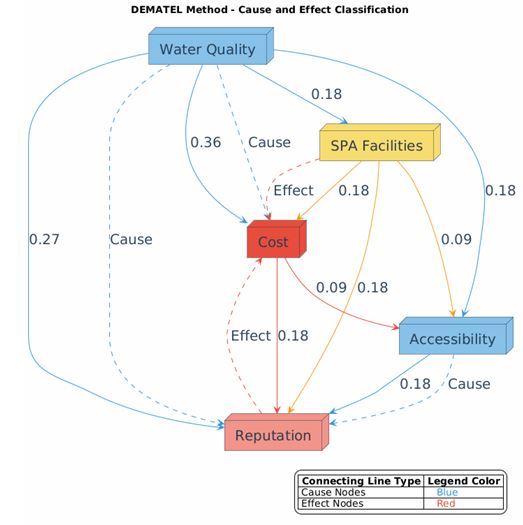
TABLE1: Data set |
||||||
Data set |
||||||
|
Water Quality |
SPA Facilities |
Cost |
Accessibility |
Reputation |
Sum |
Water Quality |
0 |
2 |
4 |
2 |
3 |
11 |
SPA Facilities |
2 |
0 |
2 |
1 |
2 |
7 |
Cost |
2 |
1 |
0 |
1 |
2 |
6 |
Accessibility |
2 |
3 |
2 |
0 |
2 |
9 |
Reputation |
2 |
1 |
3 |
2 |
0 |
8 |
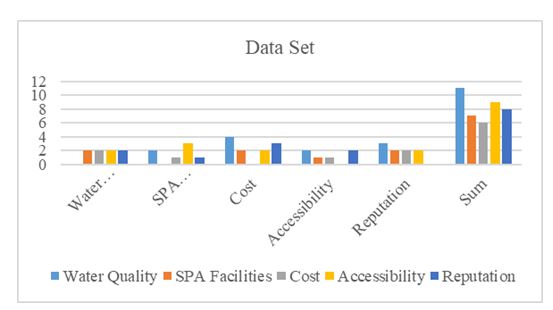
Table2: Normalisation of direct relation matrix |
|||||
|
Water Quality |
SPA Facilities |
Cost |
Accessibility |
Reputation |
Water Quality |
0 |
0.181818 |
0.363636 |
0.181818 |
0.272727 |
SPA Facilities |
0.181818 |
0 |
0.181818 |
0.090909 |
0.181818 |
Cost |
0.181818 |
0.090909 |
0 |
0.090909 |
0.181818 |
Accessibility |
0.181818 |
0.272727 |
0.181818 |
0 |
0.181818 |
Reputation |
0.181818 |
0.090909 |
0.272727 |
0.181818 |
0 |
TABLE 3: Calculate the total relation matrix |
|||||
Calculate the total relation matrix |
|||||
|
Water Quality |
SPA Facilities |
Cost |
Accessibility |
Reputation |
Water Quality |
0 |
0.181818 |
0.363636 |
0.181818 |
0.272727 |
SPA Facilities |
0.181818 |
0 |
0.181818 |
0.090909 |
0.181818 |
Cost |
0.181818 |
0.090909 |
0 |
0.090909 |
0.181818 |
Accessibility |
0.181818 |
0.272727 |
0.181818 |
0 |
0.181818 |
Reputation |
0.181818 |
0.090909 |
0.272727 |
0.181818 |
0 |
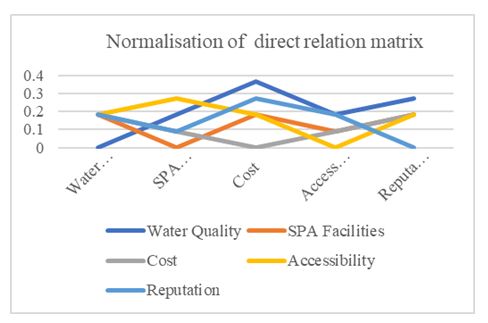
TABLE 4. T= Y(I-Y)-1 I= Identity matrix |
||||
I |
||||
1 |
0 |
0 |
0 |
0 |
0 |
1 |
0 |
0 |
0 |
0 |
0 |
1 |
0 |
0 |
0 |
0 |
0 |
1 |
0 |
TABLE 4. T= Y(I-Y)-1 I= Identity matrix |
||||
I |
||||
1 |
0 |
0 |
0 |
0 |
0 |
1 |
0 |
0 |
0 |
0 |
0 |
1 |
0 |
0 |
0 |
0 |
0 |
1 |
0 |
TABLE 6. I |
||||
I-Y |
||||
1 |
-0.18182 |
-0.36364 |
-0.18182 |
-0.27273 |
-0.18182 |
1 |
-0.18182 |
-0.09091 |
-0.18182 |
-0.18182 |
-0.09091 |
1 |
-0.09091 |
-0.18182 |
-0.18182 |
-0.27273 |
-0.18182 |
1 |
-0.18182 |
-0.18182 |
-0.09091 |
-0.27273 |
-0.18182 |
1 |
TABLE 7. (I |
||||
(I-Y)-1 |
||||
1.543993 |
0.602448 |
0.998192 |
0.574713 |
0.816608 |
0.530625 |
1.311517 |
0.656217 |
0.379261 |
0.571442 |
0.489808 |
0.364478 |
1.451892 |
0.350087 |
0.527485 |
0.619062 |
0.613437 |
0.765586 |
1.359138 |
0.666683 |
0.575105 |
0.439702 |
0.776314 |
0.481566 |
1.465498 |
TABLE 8. Total Relation matrix (T) |
||||||
|
Total Relation matrix (T) |
Ri |
||||
|
0.543993 |
0.602448 |
0.998192 |
0.574713 |
0.816608 |
3.535953 |
|
0.530625 |
0.311517 |
0.656217 |
0.379261 |
0.571442 |
2.449062 |
|
0.489808 |
0.364478 |
0.451892 |
0.350087 |
0.527485 |
2.183749 |
|
0.619062 |
0.613437 |
0.765586 |
0.359138 |
0.666683 |
3.023905 |
|
0.575105 |
0.439702 |
0.776314 |
0.481566 |
0.465498 |
2.738184 |
ci |
2.758593 |
2.331581 |
3.648201 |
2.144763 |
3.047715 |
|
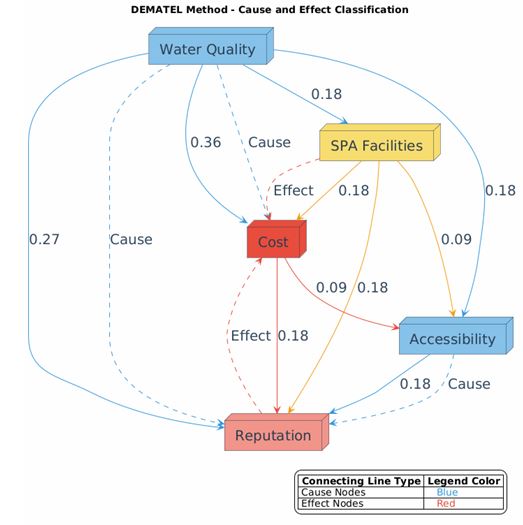
TABLE 9. Ri & Ci |
||
|
Ri |
Ci |
Water Quality |
3.535953 |
2.758593 |
SPA Facilities |
2.449062 |
2.331581 |
Cost |
2.183749 |
3.648201 |
Accessibility |
3.023905 |
2.144763 |
Reputation |
2.738184 |
3.047715 |
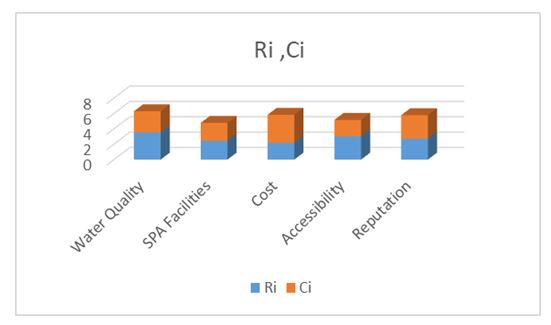
TABLE 10. Calculation of Ri+Ci and Ri-Ci To Get The Cause And Effect |
|||
Ri+Ci |
Ri-Ci |
Rank |
Identity |
6.294546 |
0.77736 |
1 |
cause |
4.780643 |
0.117481 |
5 |
cause |
5.83195 |
-1.46445 |
2 |
effect |
5.168669 |
0.879142 |
4 |
cause |
5.785899 |
-0.30953 |
3 |
effect |
TABLE 11. T matrix |
||||
T matrix |
||||
0.543993 |
0.602448 |
0.998192 |
0.574713 |
0.816608 |
0.530625 |
0.311517 |
0.656217 |
0.379261 |
0.571442 |
0.489808 |
0.364478 |
0.451892 |
0.350087 |
0.527485 |
0.619062 |
0.613437 |
0.765586 |
0.359138 |
0.666683 |
0.575105 |
0.439702 |
0.776314 |
0.481566 |
0.465498 |
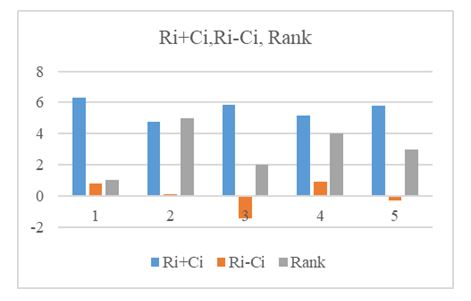
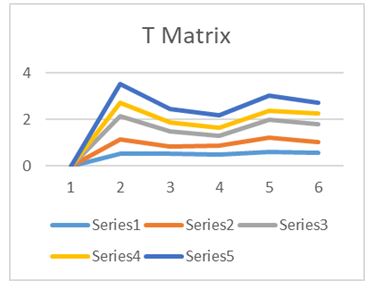
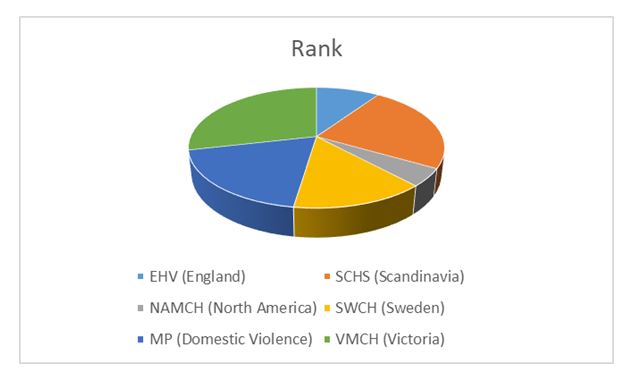
parameters. Spas should focus on maintaining excellent water quality, managing costs effectively, and fostering a strong reputation. While accessibility and facilities are less critical, they should be optimized to provide a holistic experience. Balancing all parameters ensures customer satisfaction, loyalty, and long-term success. manage costs effectively, and maintain a strong reputation. Optimizing accessibility and facilities ensures a holistic and satisfying experience, leading to sustained customer loyalty and business success.
- Wu, Wei-Wen, and Yu-Ting Lee. "Developing global managers’ competencies using the fuzzy DEMATEL method." Expert systems with applications 32, no. 2 (2007): 499-507.
- Shieh, Jiunn-I., Hsin-Hung Wu, and Kuan-Kai Huang. "A DEMATEL method in identifying key success factors of hospital service quality." Knowledge-Based Systems 23, no. 3 (2010): 277-282.
- Lin, Ya-Ti, Yeou-Herng Yang, Jin-Su Kang, and Hsiao-Cheng Yu. "Using DEMATEL method to explore the core competences and causal effect of the IC design service company: An empirical case study." Expert Systems with Applications 38, no. 5 (2011): 6262-6268.
- Lin, Kuo-Ping, Ming-Lang Tseng, and Ping-Feng Pai. "Sustainable supply chain management using approximate fuzzy DEMATEL method." Resources, Conservation and Recycling 128 (2018): 134-142.
- Koca, Gözde, and Seda Yıldırım. "Bibliometric analysis of DEMATEL method." Decision Making: Applications in Management and Engineering 4, no. 1 (2021): 85-103.
- Si, Sheng-Li, Xiao-Yue You, Hu-Chen Liu, and Ping Zhang. "DEMATEL technique: a systematic review of the state‐of‐the‐art literature on methodologies and applications." Mathematical problems in Engineering 2018, no. 1 (2018): 3696457.
- Abdel-Basset, Mohamed, Gunasekaran Manogaran, Abduallah Gamal, and Florentin Smarandache. "A hybrid approach of neutrosophic sets and DEMATEL method for developing supplier selection criteria." Design Automation for Embedded Systems 22 (2018): 257-278.
- Mirmousa, Sajede, and Hasan Dehghan Dehnavi. "Development of criteria of selecting the supplier by using the fuzzy DEMATEL method." Procedia-Social and Behavioral Sciences 230 (2016): 281-289.
- Seleem, Sameh N., El-Awady Attia, and Ahmed El-Assal. "Managing performance improvement initiatives using DEMATEL method with application case study." Production Planning & Control 27, no. 7-8 (2016): 637-649.
- Muhammad, Muhammad Nazir, and Nadire Cavus. "Fuzzy DEMATEL method for identifying LMS evaluation criteria." Procedia computer science 120 (2017): 742-749.
- Buiten, Miriam C. "Towards intelligent regulation of artificial intelligence." European Journal of Risk Regulation 10, no. 1 (2019): 41-59.
- Haenlein, Michael, and Andreas Kaplan. "A brief history of artificial intelligence: On the past, present, and future of artificial intelligence." California management review 61, no. 4 (2019): 5-14.
- Lu, Huimin, Yujie Li, Min Chen, Hyoungseop Kim, and Seiichi Serikawa. "Brain intelligence: go beyond artificial intelligence." Mobile Networks and Applications 23 (2018): 368-375.
- Patel, Vimla L., Edward H. Shortliffe, Mario Stefanelli, Peter Szolovits, Michael R. Berthold, Riccardo Bellazzi, and Ameen Abu-Hanna. "The coming of age of artificial intelligence in medicine." Artificial intelligence in medicine 46, no. 1 (2009): 5-17.
- Lu, Pengzhen, Shengyong Chen, and Yujun Zheng. "Artificial intelligence in civil engineering." Mathematical Problems in Engineering 2012, no. 1 (2012): 145974.
- He, Jianxing, Sally L. Baxter, Jie Xu, Jiming Xu, Xingtao Zhou, and Kang Zhang. "The practical implementation of artificial intelligence technologies in medicine." Nature medicine 25, no. 1 (2019): 30-36.
- Muthukrishnan, Nikesh, Farhad Maleki, Katie Ovens, Caroline Reinhold, Behzad Forghani, and Reza Forghani. "Brief history of artificial intelligence." Neuroimaging Clinics of North America 30, no. 4 (2020): 393-399.
- Ng, Andrew. "What artificial intelligence can and can’t do right now." Harvard Business Review 9, no. 11 (2016): 1-4.
- McCarthy, John, Marvin L. Minsky, Nathaniel Rochester, and Claude E. Shannon. "A proposal for the dartmouth summer research project on artificial intelligence, august 31, 1955." AI magazine 27, no. 4 (2006): 12-12.
- Nilsson, Nils J. "Artificial intelligence prepares for 2001." AI Magazine 4, no. 4 (1983): 7-7.
- Thierer, Adam D., Andrea Castillo O'Sullivan, and Raymond Russell. "Artificial intelligence and public policy." Mercatus Research Paper (2017).
- López, Cefe. "Artificial intelligence and advanced materials." Advanced Materials 35, no. 23 (2023): 2208683.
- Pan, Yunhe. "Heading toward artificial intelligence 2.0." Engineering 2, no. 4 (2016): 409-413.
- Bianchini, Stefano, Moritz Müller, and Pierre Pelletier. "Artificial intelligence in science: An emerging general method of invention." Research Policy 51, no. 10 (2022): 104604.
- Malinka, Kamil, Martin Peresíni, Anton Firc, Ondrej Hujnák, and Filip Janus. "On the educational impact of chatgpt: Is artificial intelligence ready to obtain a university degree?." In Proceedings of the 2023 Conference on Innovation and Technology in Computer Science Education V. 1, pp. 47-53. 2023.
- Brendel, Alfred Benedikt, Milad Mirbabaie, Tim-Benjamin Lembcke, and Lennart Hofeditz. "Ethical management of artificial intelligence." Sustainability 13, no. 4 (2021): 1974.
- Schwartz, Reva, Reva Schwartz, Apostol Vassilev, Kristen Greene, Lori Perine, Andrew Burt, and Patrick Hall. Towards a standard for identifying and managing bias in artificial intelligence. Vol. 3. US Department of Commerce, National Institute of Standards and Technology, 2022.
- Gams, Matjaz, Irene Yu-Hua Gu, Aki Härmä, Andrés Muñoz, and Vincent Tam. "Artificial intelligence and ambient intelligence." Journal of Ambient Intelligence and Smart Environments 11, no. 1 (2019): 71-86.
- Ågerfalk, Pär J. "Artificial intelligence as digital agency." European Journal of Information Systems 29, no. 1 (2020): 1-8.
- Carrillo, Margarita Robles. "Artificial intelligence: From ethics to law." Telecommunications policy 44, no. 6 (2020): 101937.
- Pendyala, S. K. (2024). Healthcare Data Analytics: Leveraging Predictive Analytics For Improved Patient Outcomes. International Journal Of Computer Engineering And Technology (Ijcet), 15(6), 548-565. https://iaeme.com/MasterAdmin/ Journal_uploads/IJCET/VOLUME_15_ISSUE_6/IJCET_15_06_046.pdf
- Pendyala, S. K. (2024). Real-time Analytics and Clinical Decision Support Systems: Transforming Emergency Care. International Journal for Multidisciplinary Research (IJFMR), 6(6). Available at: https://doi.org/10.36948/ ijfmr.2024.v06i06.31500
- class="bullttenumber"Pendyala, S. K. Transformation of Healthcare Analytics: Cloud-Powered Solutions with Data Science, ML, and LLMs. International Journal of Scientific Research in Computer Science, Engineering and Information Technology (IJSRCSEIT), 10(6), 724-734. Available at: https://ijsrcseit.com/index.php/ home/article/view/CSEIT241061114
- Pendyala, S. K. (2024). Enhancing Healthcare Pricing Transparency: A Machine Learning and AI-Driven Approach to Pricing Strategies and Analytics. International Journal of Scientific Research in Computer Science, Engineering and Information Technology (IJSRCSEIT), 10(6), 2334-2344. Available at: https://ijsrcseit.com/index.php/home/article/view/ CSEIT2410612436
- Pendyala, S. K. (2024). Optimizing Cloud Solutions: Streamlining Healthcare Data Lakes For Cost Efficiency. Technology (IJRCAIT), 7(2). Available at: https://iaeme.com/MasterAdmin/Journal_uploads/ IJRCAIT/VOLUME_7_ISSUE_2/IJRCAIT_07_02_113.pdf
- Pendyala, S. K. . (2025). Data Engineering At Scale: Streaming Analytics With Cloud And Apache Spark. Journal of Artificial Intelligence and Machine Learning, 3(1), 1-9. https://doi.org/10.55124/jaim.v3i1.248
- Pendyala, S. K. (2025). Edge-Cloud Continuum for Ai-Driven remote Patient Monitoring: A Scalable Framework. Journal of Data Science and Information Technology, 2(1), 66-74. https://doi.org/10.55124/jdit.v2i1.244
- Santhosh Kumar Pendyala (2025) Healthcare Value-Based Reimbursement: A Predictive Analytics and Machine Learning Page 2 of 9 Framework for Cost Optimization and Quality Improvement. Int J Adv Robot Automn 7(1): 1-9. DOI: https://doi.org/10.15226/2473-3032/7/1/00143

