


Research article
Open Access
Bacterial Community Structure of Fermenting Grains
in Fen Wine
Pan Zhen1, Ke Yue2, Mengke Xu2 and Jihong Jiang2*
1Shanxi Xinghuacun Fen Wine Factory Co.,Ltd., Fenyang, 032205, Shanxi Province, China
2The Key Laboratory of Biotechnology for Medicinal Plants of Jiangsu Province, Jiangsu Normal University, Shanghai Road 101, Xuzhou, 221116, Jiangsu Province, China
2The Key Laboratory of Biotechnology for Medicinal Plants of Jiangsu Province, Jiangsu Normal University, Shanghai Road 101, Xuzhou, 221116, Jiangsu Province, China
*Corresponding author: Jihong Jiang, The Key Laboratory of Biotechnology for Medicinal Plants of Jiangsu Province, Jiangsu Normal University,
Shanghai Road 101, Xuzhou, 221116, Jiangsu Province, China; E-mail:
@
Received: August 09, 2019; Accepted: September 12, 2019; Published: September 19, 2019
Citation: Jiang J, Zhen P, Yue K, Mengke Xu (2019) Bacterial Community Structure of Fermenting Grains in Fen Wine. Int J Hort Agric 4(2): 1-7. DOI: 10.15226/2572-3154/4/2/00128
Abstract Top
Fen wine is a typical representative of Daqu Fen-flavor liquor
with traditional solid-state separation fermentation and secondary
pure-steaming technology. Due to the non-sterile and open solid-state
fermentation procedure, the bacteria community involved exhibit a
high complexity. This makes it difficult to control the fermentation
process, which is critical to the overall quality and taste of the Fen wine.
In this study, we applied the Illumina MiSeq to characterize the overall
bacteria species during the fermentation of grains. The results showed
the changes of bacteria community structure, including the number of
species and their relative quantity, which will help to standardize the
fermentation procedure and provide a valuable quality control standard.
Key words: Fen Wine; Fermenting Grains; Bacterial Diversity; High- Throughput Sequencing
Key words: Fen Wine; Fermenting Grains; Bacterial Diversity; High- Throughput Sequencing
IntroductionTop
Fen wine is a typical representative of Daqu Fen-flavor
liquor with traditional solid-state separation fermentation and
secondary pure-steaming technology. It is famous for its smooth
and soft entrance, sweet taste, fragrance and long aftertaste.
However, the traditional open production mode of Fen wine led to
extremely complex bacterial changes in the fermentation process,
and the bacterial diversity. Therefore, studying the bacterial
sources of Fen wine fermentation plays an important role in the
production of Fen wine, particularly on how to increase yield,
stability and quality.
The traditional method of studying bacterial community structure is isolation, followed by identification of the isolated strains. With the development of technology, molecular biology methods have been used in studying microorganisms in recent years, such as denaturing gradient gel electrophoresis (DGGE), single-strand conformation polymorphism (SSCP), temperature gradient gel electrophoresis, gene library and FISH technology, et al. [1-9]. Traditional isolation of strains can be only studied on a small number of strains. Mutation technology and library method cannot accurately quantify the strains, in the meanwhile, the workload is large and the sensitivity is not high. Compared with these methods, high-throughput sequencing technology has advantage on the study of bacterial community structure, accurate quantification, long reading and real-time detection [10- 15].
High-throughput sequencing technology has been applied in many fields of molecular biology [16], but it has rarely been reported in the study of Fen wine brewing microorganisms. Previous study had used the technology in the yeast for making liquor.
In this study, high-throughput sequencing technology was used in Fen wine fermentation for the first time, utilized Illumina MiSeq PE300 sequencing platform to analyze fermenting grain samples during the fermentation process and established a highthroughput sequencing technology to analyze microorganisms in Fen wine fermentation. At the same time, more accurate and complete analysis of the bacterial community structure changes in the fermentation process of Fen wine was carried out.
The traditional method of studying bacterial community structure is isolation, followed by identification of the isolated strains. With the development of technology, molecular biology methods have been used in studying microorganisms in recent years, such as denaturing gradient gel electrophoresis (DGGE), single-strand conformation polymorphism (SSCP), temperature gradient gel electrophoresis, gene library and FISH technology, et al. [1-9]. Traditional isolation of strains can be only studied on a small number of strains. Mutation technology and library method cannot accurately quantify the strains, in the meanwhile, the workload is large and the sensitivity is not high. Compared with these methods, high-throughput sequencing technology has advantage on the study of bacterial community structure, accurate quantification, long reading and real-time detection [10- 15].
High-throughput sequencing technology has been applied in many fields of molecular biology [16], but it has rarely been reported in the study of Fen wine brewing microorganisms. Previous study had used the technology in the yeast for making liquor.
In this study, high-throughput sequencing technology was used in Fen wine fermentation for the first time, utilized Illumina MiSeq PE300 sequencing platform to analyze fermenting grain samples during the fermentation process and established a highthroughput sequencing technology to analyze microorganisms in Fen wine fermentation. At the same time, more accurate and complete analysis of the bacterial community structure changes in the fermentation process of Fen wine was carried out.
Materials and MethodsTop
Sample Source
Fermentation grains in the fermentation process of Fen
wine, “First dregs” refers to the solid grains that settle to the
bottom of the first fermentation, “Second dregs” refers to the
solid grains that settle to the bottom of the second fermentation.
First fermentation: Input samples (D0d), fermentation samples after 4 days (D4d), 7 days (D7d), 10 days (D10d), 15 days (D15d), 21days (D21d), output samples: fermentation samples after 28days, (D28d).
Second fermentation: Input material (D0e), fermentation samples after 4 days (D4e), 7 days (D7e), 10 days (D10e), 15 days (D15e), 21days (D21e), output samples: fermentation samples after 28days (D28e).
The fermentation samples were selected from the same batch of materials in the same production team. Samples were taken from the central part of the ground pot.
First fermentation: Input samples (D0d), fermentation samples after 4 days (D4d), 7 days (D7d), 10 days (D10d), 15 days (D15d), 21days (D21d), output samples: fermentation samples after 28days, (D28d).
Second fermentation: Input material (D0e), fermentation samples after 4 days (D4e), 7 days (D7e), 10 days (D10e), 15 days (D15e), 21days (D21e), output samples: fermentation samples after 28days (D28e).
The fermentation samples were selected from the same batch of materials in the same production team. Samples were taken from the central part of the ground pot.
Main Reagents and Instruments
Premix Ex Taq™ Hot Start Version (Takara); DL2000 DNA
Marker (Takara); L96G Gradient PCR (LongGene); Illumina MiSeq
PE300 (Illumina).
Total DNA Extraction
Extraction method of total DNA from fermenting grains [17]:
1. Take 0.5g samples in 2.0mL centrifugal tube, add 1 mL PBS buffer , and vigorously shake 5 minutes with Vortex mixer
2. Centrifugation at 2000 g for 5 minutes, take supernatant, centrifugation at 18000 g for 5 minutes, collect bacteria samples, and continue to add PBS buffer to the previous pellet, repeat shaking and washing, add the supernatant to the tube of the last collection of bacteria, repeat the washing and transfer the supernatant to the tube of bacteria.
3. 1 ml of CTAB (Cetyltrimethyl ammonium bromide) lysate solution, which contain 2% CTAB w/v, 100 mM Tris-HCl pH 8.0, 20 mM EDTA, 1.4 M NaCl, 4%(w/v) polyvinylpyrrolidone(PVP), 0.1% (w/v) ascorbic acid and 10 mM β-mercaptoethanol (add freshly), were added to the pellet and shaken at 65° C for 30 minutes.
4. Add 5 μL of proteinase k at a concentration of 20 mg/mL, shake at 55° C for 30 minutes, centrifuge at 6000 g for 10 minutes at 4° C, and carefully pipette the supernatant into a 2 mL centrifuge tube
5. Add isovolumetric mixer of phenol: chloroform: isoamyl alcohol (25:24:1), shake and fully mix in the vortex mixer and then centrifuge at 18000 g for 10 minutes.
6. Take the supernatant, add equal volume chloroform: isoamyl alcohol (24:1), shake and fully mix in a vortex mixer, and then centrifuge at 18000 g for 10 minutes, take the supernatant, repeat.
7. Take the supernatant, add 0.6 volume of pre-cold isopropanol to the supernatant, precipitate at - 20° C for 30 minutes, centrifuge at 18000 g for 10 minutes, and carefully pour out the liquid.
8. Pellet was washed twice with 70% ethanol, supernatant was discarded, DNA was dried, ultrapure water containing 10ng/ μL Rnase was added to dissolve the pellet, incubated at 37° C for 1 hour, and reserved.
1. Take 0.5g samples in 2.0mL centrifugal tube, add 1 mL PBS buffer , and vigorously shake 5 minutes with Vortex mixer
2. Centrifugation at 2000 g for 5 minutes, take supernatant, centrifugation at 18000 g for 5 minutes, collect bacteria samples, and continue to add PBS buffer to the previous pellet, repeat shaking and washing, add the supernatant to the tube of the last collection of bacteria, repeat the washing and transfer the supernatant to the tube of bacteria.
3. 1 ml of CTAB (Cetyltrimethyl ammonium bromide) lysate solution, which contain 2% CTAB w/v, 100 mM Tris-HCl pH 8.0, 20 mM EDTA, 1.4 M NaCl, 4%(w/v) polyvinylpyrrolidone(PVP), 0.1% (w/v) ascorbic acid and 10 mM β-mercaptoethanol (add freshly), were added to the pellet and shaken at 65° C for 30 minutes.
4. Add 5 μL of proteinase k at a concentration of 20 mg/mL, shake at 55° C for 30 minutes, centrifuge at 6000 g for 10 minutes at 4° C, and carefully pipette the supernatant into a 2 mL centrifuge tube
5. Add isovolumetric mixer of phenol: chloroform: isoamyl alcohol (25:24:1), shake and fully mix in the vortex mixer and then centrifuge at 18000 g for 10 minutes.
6. Take the supernatant, add equal volume chloroform: isoamyl alcohol (24:1), shake and fully mix in a vortex mixer, and then centrifuge at 18000 g for 10 minutes, take the supernatant, repeat.
7. Take the supernatant, add 0.6 volume of pre-cold isopropanol to the supernatant, precipitate at - 20° C for 30 minutes, centrifuge at 18000 g for 10 minutes, and carefully pour out the liquid.
8. Pellet was washed twice with 70% ethanol, supernatant was discarded, DNA was dried, ultrapure water containing 10ng/ μL Rnase was added to dissolve the pellet, incubated at 37° C for 1 hour, and reserved.
Primers and PCR Amplification
Bacterial universal primers 338f (5’-ACT CCT ACG GGA GGC
AGC AG-3’) and 806r (5’-GGA CTA CHV GGG TWT CTA AT-3’)
were used for amplification of 16S rRNA genes, the sequence of
V3+V4 region with the length of 469 bp. The PCR amplification
system was as follows: template DNA 100 ng, each of primer 1
and primer 2: 2.5 μL, Premix Ex TaqTM Hot Start Version 12.5
μL, supplemented with ddH2O to 25μL. The procedure of PCR
reaction was as follows: 35 cycles were performed after of
pre-denaturation at 98° C for 30 seconds. Each cycle included
denaturation at 98° C for 10 seconds, annealing at 54° C for 30
seconds, extension at 72° C for 45 seconds, the last cycle was
extended at 72° C for 10 minutes and stored at 4° C.
High-Throughput Sequencing
The original image data files were obtained using Illumina
MiSeq PE300 analysis platform (2x250 paired-end sequencing
run), and converted to the original Sequenced Reads by Base
Calling analysis.
Data Analysis
The original sequencing sequences were filtered and doubleended
spliced to obtain optimized sequence (Tags). The merge
of paired-end reads was merged using FLASH [18]. Minimum
overlap was set up to 10 bp, maximum mismatch ratio was set
to 0.2. The merged sequence was used as raw Tags for following
data analysis. Raw tags were filtered using Trimmomatic [19].
With following parameter: length threshold of sliding window
was set to 50 bp, if the overall quality score was below 20, the
sequence was trimmed from beginning of the sliding window.
After trimming, resulting tags that were below 75% of the input
tags were discarded. UCHIME [20] was used to filter Chimera
sequence. The obtained Tags was finally checked and filtered
for singletons using USEARCH [21]. The optimized sequence
was clustered at 97% similarity level using UCLUST function of
QIIME software [22]. Obtained OTU was divided and the species
classification was obtained according to Silva data base (https://
www.arb-silva.de).
Results and AnalysisTop
Quality Assessment of Optimized Sequences
According to the Overlap relationship between PE reads [23],
the double-ended sequence data obtained by Miseq sequencing is
spliced into a sequence of Tags, and the quality of Reads and the
effect of Merge are quality-controlled and filtered. The results of
double-ended Reads splicing of fermentation grain samples are
shown in Table 1.
Table 1: Statistics of Tags spliced by double-ended from fermentation grain samples
Sample_ID |
Tags_Sum |
Bases_Sum |
GC(%) |
Q20(%) |
Q30(%) |
Good’s coverage |
D0d |
57236 |
23810511 |
53.3 |
95.46 |
85.02 |
0.99925858 |
D4d |
69373 |
29058827 |
50.92 |
95.83 |
85.85 |
0.99915383 |
D7d |
67322 |
28360787 |
51.04 |
95.78 |
85.8 |
0.99913722 |
D10d |
70155 |
29438321 |
50.56 |
96.08 |
86.41 |
0.99934024 |
D15d |
56371 |
23812669 |
50.67 |
95.74 |
85.69 |
0.99882043 |
D21d |
59597 |
25189017 |
50.78 |
95.4 |
84.74 |
0.99922083 |
D28d |
58938 |
24889726 |
51.16 |
95.58 |
85.25 |
0.99895308 |
D0e |
39886 |
16625977 |
53.78 |
93.58 |
82.22 |
0.99874801 |
D4e |
26439 |
11102225 |
52.61 |
95.4 |
84.89 |
0.99825414 |
D7e |
26540 |
11206188 |
51.85 |
95.21 |
84.58 |
0.99755593 |
D10e |
52709 |
22100061 |
52.07 |
93.65 |
82.12 |
0.99960937 |
D15e |
36858 |
15331577 |
50.68 |
94.4 |
83.36 |
0.99903625 |
D21e |
60453 |
25421115 |
50.93 |
95.66 |
85.4 |
0.99947632 |
D28e |
27507 |
11681389 |
50.94 |
95.28 |
84.67 |
0.99864416 |
Note: Sample_ID: Sample number; Tags_Sum: number of sequences obtained by filtration and splicing; Bases_Sum: total number of bases; GC (%):GC content of sample, i.e. the percentage of G and C type bases in total base number; Q20 (%): the percentage of bases whose mass value is greater
than or equal to 20 in total base number; Q30 (%): the percentage of bases whose mass value is greater than or equal to 30 in total base number.
Totally fourteen fermenting grains samples were filtered and
spliced to produce 709,384 Tags, with an average of 50,670 Tags
per sample, up to 70,155 Tags and minimum of 26,439 Tags.
OTU Division and Sequencing Depth Assessment
OTU Partition
After OTU partition of Tags at a similarity level of 97%, the
OTU was classified as a taxonomic species based on the Silva
database. A total of 531 bacterial OTUs were obtained by Tags
cluster analysis of fermentation grain samples, including 482
OTUs from first fermentation grain samples and 362 OTUs from
second fermentation grain samples.
Sequencing Depth Assessment
A random sampling method for sequencing sequences was
used to construct a curve with the number of sequences and the
number of OTUs they can represent, i.e. Samples Rarefaction
Curves [24]. When the curve tends to be flat, it shows that the
number of sequencing is reasonable and more data contributes
little to the discovery of new OTUs. On the contrary, it indicates
that further sequencing may produce new OTUs. Therefore, the
sequencing depth can be evaluated by dilution curve.

Figure 1:Samples Rarefaction Curves (First fermentation)
Figure 2:Samples Rarefaction Curves (Second fermentation)
As shown in Figure 1 and 2, the dilution curves of the
fermentation grain samples from First fermentation and second
fermentation show a continuous upward trend, which indicates
that the OTU of the samples is not enough to cover all the bacteria.
Further sequencing will lead to the appearance of new OTUs.

Figure 3: Bacterium structure and regularities (First fermentation) Figure 4: Bacterium structure and regularities (Second fermentation)
A total of 56 families of bacteria were detected in fermenting
grains. Among them, Lactobacillaceae, Leuconostocaceae, Bacillaceae,
Phyllobacteriaceae and Bacteroidaceae were the dominant families
in first fermentation grain samples, accounting for 92.4% of the
total bacteria. Lactobacillaceae, Leuconostocaceae, Bacillaceae,
Staphylococcaceae and Phyllobacteriaceae were the dominant
bacteria in second fermentation grain samples, accounting for
89.1% of the total bacteria. The highest content of Lactobacillaceae
increased from 29.8% at 0 days to 93.2% after 7 days during the
first fermentation, and from 29.1% at 0 days to 95.6% after 15 days
during the second fermentation, which indicated that the growth
and reproduction rate of Lactobacillaceae bacteria during the
first fermentation was significantly higher than during the second
fermentation.
Diversity Analysis
Single Sample Diversity (Alpha Diversity) Analysis
Single Sample Diversity (Alpha Diversity) Analysis
Alpha diversity reflects species diversity within a single
sample, and there are many indicators to measure it. Among
them, Shannon index is affected by species abundance and
community evenness in the sample community. It is generally
considered that, under the same species abundance, the greater
evenness of each species in the community, the greater diversity
of the community [25]. Using OTU with 97% similarity level and
Rarefaction analysis with Mothur software, the graph is made by
R language tool.
Figure 5 and 6 show Endpoint (Plateau) of Shannon Index Curves of Fermenting Grain Samples.
Figure 5 and 6 show Endpoint (Plateau) of Shannon Index Curves of Fermenting Grain Samples.

Figure 5: Samples Shannon curves (Fisrt fermentation) Figure 6:Samples Shannon curves (Second fermentation)
Since the diversity reached plateau at the beginning of the
fermentation (data not shown), an endpoint Shannon index was
plotted as function of time. It can be seen from Figure 5 and 6
that the bacterial diversity index (Endpoint Shannon Index)
of the first and second fermentation grain samples showed the
same trend. With the fermentation proceeding, diversity index
gradually decreased. At the same time, the attenuation degree
of diversity index of the first fermentation grains is much higher
than that of the second fermentation grains.
Multiple Sample Diversity (Beta Diversity) Analysis
Unlike Alpha diversity analysis, Beta diversity analysis
is used to compare differences in species diversity among
different samples. The difference and distance of samples can be
reflected by the analysis of OTU (97% similarity) composition of
different samples by the method of PCA [26]. PCA uses variance
decomposition to reflect the difference of multi-group data on
two-dimensional coordinate graph. On the graph, the coordinate
axis can best reflect the two eigenvalues of variance. The closer
the two samples are, the more similar their composition is.
Samples from different treatments or environments may exhibit
distributions of dispersion and aggregation, which can be used to
determine whether the composition of samples under the same
conditions has similarity.

Figure 7:Samples PCA (First fermentation) Figure 8:Samples PCA (Second fermentation)
As shown in Figure 7 and 8, the bacterial community
structure of first fermentation grain samples has high similarity
between samples from 0 day and 4 days, there is high similarity
among samples from 7 days, 10 days and 15 days, it has also
high similarity between samples from 21 days and 28 days. The
bacterial community structure of second fermentation grains
samples was similarity between samples from 0day and 4days,
samples from 7 days and 10 days, it has also high similarity
among samples from 15 days, 21 days and 28 days. That is to
say, the bacterial community of first fermentation was relatively
stable in the mid-fermentation period, while the bacterial
community of second fermentation was relatively stable in
the late fermentation period. At the same time, the variation of
bacterial diversity index in the fermentation process of second
fermentation was higher than that in the fermentation process
of first fermentation. Braycurtic dissimilarity between group
e and d was used to describe the similarity. ANOSIM statistic R
value was 0.2742 with 0.035 significance (P< 0.05). These results
indicate certain similarity between sample group e and d.
Sample OTU Comparison (Venn Diagram)
At 97% similarity level, the number of OTUs for each sample
was obtained. Venn diagram was used to show the numbers of
common and unique OTUs among the samples [27]. The overlap
of OTUs between samples was visually displayed. Combined with
the species represented by OTU, core microorganisms in different
environments can be identified.
In Figure 9, different samples are shown in different colors, the number shown in the overlap part between the different color patterns is the number of OTUs shared between the two samples, and the number shown in the non-overlapping part is the number of OTUs unique to each sample. It can be seen from Figure 9 that during the contemporaneous period of the first and second fermentation, the total number of OTUs in the samples at first increased and decreased later, the number of OTUs reached the maximum after 7 days fermentation. In first fermentation, the number of unique OTUs increased at first and decreased later, reaching the maximum after 15 days fermentation. In second fermentation, the number of unique OTUs showed a downward trend, the maximum is at the very beginning of fermentation (0 days), and then the number gradually decreased.
In Figure 9, different samples are shown in different colors, the number shown in the overlap part between the different color patterns is the number of OTUs shared between the two samples, and the number shown in the non-overlapping part is the number of OTUs unique to each sample. It can be seen from Figure 9 that during the contemporaneous period of the first and second fermentation, the total number of OTUs in the samples at first increased and decreased later, the number of OTUs reached the maximum after 7 days fermentation. In first fermentation, the number of unique OTUs increased at first and decreased later, reaching the maximum after 15 days fermentation. In second fermentation, the number of unique OTUs showed a downward trend, the maximum is at the very beginning of fermentation (0 days), and then the number gradually decreased.
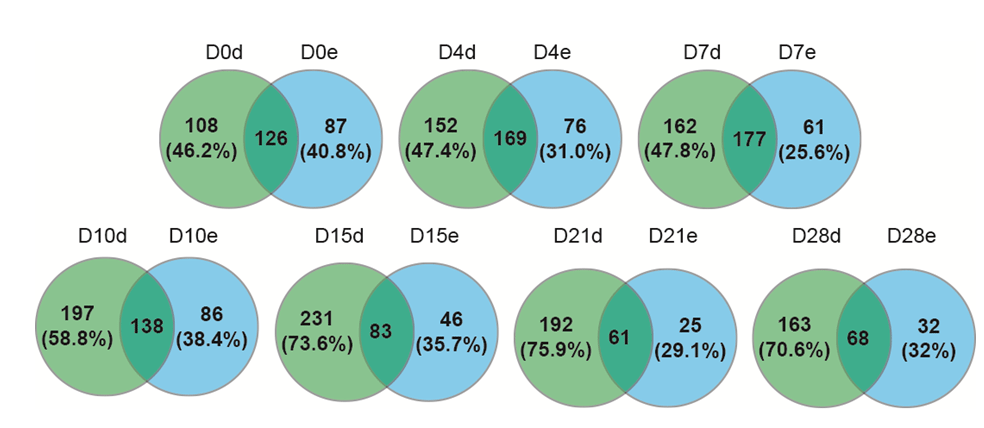
Figure 9:Venn diagram of operational taxonomic unit
SummaryTop
In this study, Illumina MiSeq sequencing method was used
to directly amplify alteration regions from fermenting grains
of Fen wine for sequencing, which avoided the limitations of
studying microorganisms by means of cultivation, and objectively
reduced the changing rules of bacterial community structure and
abundance in the fermenting grains of Fen wine.
The results showed that a total of 531 bacterial OTUs were obtained at 97% similarity level. At the level of family classification, the dominant bacteria from first fermentation mainly include Lactobacillaceae, Leuconostocaceae, Bacillaceae, Phyllobacteriaceae and Bacteroidaceae, the dominant bacteria of second fermentation mainly include Lactobacillaceae, Leuconostocaceae, Bacillaceae, Staphylococcaceae and Phyllobacteriaceae. The bacterial diversity index of first fermentation and second fermentation was the highest at the very beginning of fermentation, and gradually decreased with the fermentation proceeding. The bacterial community structure of first fermentation and second fermentation samples had significant differences in the early and late stages of fermentation. Comparison of fermentation grain samples from the first fermentation and second fermentation, the total number of OTUs increased at first and decreased later during the fermentation.
In total, the results showed the change law of bacterial community structure; it will help to further standardize the fermentation procedure of Fen wine and other Fen-flavor liquors. This study can provide a method in valuable quality control standard; it can also provide a theoretical support for the application of bacteria in Fen wine and other Fen-flavor liquors.
The results showed that a total of 531 bacterial OTUs were obtained at 97% similarity level. At the level of family classification, the dominant bacteria from first fermentation mainly include Lactobacillaceae, Leuconostocaceae, Bacillaceae, Phyllobacteriaceae and Bacteroidaceae, the dominant bacteria of second fermentation mainly include Lactobacillaceae, Leuconostocaceae, Bacillaceae, Staphylococcaceae and Phyllobacteriaceae. The bacterial diversity index of first fermentation and second fermentation was the highest at the very beginning of fermentation, and gradually decreased with the fermentation proceeding. The bacterial community structure of first fermentation and second fermentation samples had significant differences in the early and late stages of fermentation. Comparison of fermentation grain samples from the first fermentation and second fermentation, the total number of OTUs increased at first and decreased later during the fermentation.
In total, the results showed the change law of bacterial community structure; it will help to further standardize the fermentation procedure of Fen wine and other Fen-flavor liquors. This study can provide a method in valuable quality control standard; it can also provide a theoretical support for the application of bacteria in Fen wine and other Fen-flavor liquors.
AcknowledgementsTop
The authors acknowledge the financial support from the
Chinese National Nature Science Foundation (31770613).
ReferencesTop
- Luo Huibo, Huang Zhiguo, Li Hao, et al. PCR-SSCP analysis of the prototrophophysical community of Luzhou-flavor Daqu. Bulletin of Microbiology. 2009(09):1313-1363.
- YE Guangbin, LUO Huibo, YANG Xiaodong, et al. Study on the proto-nuclear microbial community structure of Luzhou-flavor liquor in Yanzhou based on culture-free method. Food Science. 2013(01):1-12.
- Huang Zhiguo, Zhao Bin, Wei Chunhui, et al. Study on the community structure and phylogenetic analysis of the sap of the scented liquor of Luzhou-flavor liquor. Modern Food Science and Technology. 2014(03):28-32.
- SS Helle, T lin, SJB Duff. Optimization of spent sulfite liquor fermentation. Enzyme and microbial Technology. 2008,42(3):259-264.
- Zheng XW, Yan Z, Han BZ, Zwietering MH, Samson RA, Boekhout T, et al. Complex microbiota of a Chinese “Fen” liquor fermentation starter (Fen-Daqu), revealed by culture-dependent and culture-independent methods. Food Microbiol. 2012;31(2):293-300. doi: 10.1016/j.fm.2012.03.008
- Xiao‐Wei Zheng, Minoo Rezaei Tabrizi, MJ Robert Nout, Bei‐Zhong Han. Daqu— A Traditional Chinese Liquor Fermentation Starter. Journal of the Institute of Brewing. 2011;117(1):82-90.
- Liu M, Tang Y, Zhao K, Liu Y, Guo X, Ren D,et al. Determination of the fungal community of pit mud in fermentation cellars for Chinese strong-flavor liquor, using DGGE and Illumina MiSeq sequencing. Food Res Int. 2017;91:80-87. doi: 10.1016/j.foodres.2016.11.037
- Wang X, Du H, Zhang Y, Xu Y. Environmental Microbiota Drives Microbial Succession and Metabolic Profiles during Chinese Liquor Fermentation. Appl Environ Microbiol. 2018;84(4). pii: e02369-17. doi: 10.1128/AEM.02369-17
- MJR Nout, Zheng Xiaowei, BZ Han,et al. Daqu - a fermentation starter for Chinese liquor fermentation. Nederlands Tijdschrift Voor Medische Microbiologie. 2011(19);Supplement:S70 - S70.
- Li R, Zhu H, Ruan J, Qian W, Fang X, Shi Z, et al. De novo assembly of human genomes with massively parallel short read sequencing. Genome Res. 2010;20(2):265-272. doi: 10.1101/gr.097261.109
- Yang F, Zeng X, Ning K, Liu KL, Lo CC, Wang W, et al. Saliva microbiomes distinguish caries-active from healthy human populations. ISME J. 2012;6(1):1-10. doi: 10.1038/ismej.2011.71
- Zhang Y, Wu J, Ni Q, Dong H. Multicomponent quantification of Astragalus residue fermentation liquor using ion chromatography-integrated pulsed amperometric detection. Exp Ther Med. 2017;14(2):1526-1530. doi: 10.3892/etm.2017.4673
- Min-Yu Xing, Hai Du,Yan Xu. Diversity and succession of lactic acid bacteria during sesame-flavor liquor fermentation. Microbiology China. 2018;45(1):19-28.
- Hechuan Wu, Suyi Zhang, Yingying Ma, Jian Zhou, Comparison of microbial communities in the fermentation starter used to brew Xiaoqu liquor. Journal of the Institute of Brewing. 2017;123(1):113-120.
- Pulin Liu,Xiaomao Xiong,Shuang Wang. Lihong Miao, Population dynamics and metabolite analysis of yeasts involved in a Chinese miscellaneous-flavor liquor fermentation. Annals of Microbiology. 2017;67(8):553–565.
- Maccallum, Przybylski D, Generre S, et al. ALLPATHS 2: small genomes assembled accurately and with high continuity from short paired reads. Genome Biol. 2009;10(10):R103. doi: 10.1186/gb-2009-10-10-r103
- Xiao-Ran Li,En-Bo Ma, Liang-Zhen Yan. Bacterial and fungal diversity in the traditional Chinese liquor fermentation process. International Journal of Food Microbiology. 2011;146(1):31-37.
- Magoč T, Salzberg SL. FLASH: Fast length adjustment of short reads to improve genome assemblies. Bioinformatics. 2011;27(21):2957-2963. doi: 10.1093/bioinformatics/btr507
- Bolger AM, Lohse M, Usadel B. Trimmomatic: A flexible trimmer for Illumina Sequence Data. Bioinformatics. 2014;30(15):2114-2120. doi: 10.1093/bioinformatics/btu170
- Edgar RC, Haas BJ, Clemente JC, Quince C, Knight R. UCHIME improves sensitivity and speed of chimera detection. Bioinformatics. 2011;27(16):2194-2200. doi: 10.1093/bioinformatics/btr381
- RC Edgar. Search and clustering orders of magnitude faster than BLAST. Bioinformatics. 2010;26(19):2460-2461. doi: 10.1093/bioinformatics/btq461
- Caporaso JG, Kuczynski J, Stombaugh J, Bittinger K, Bushman FD, Costello EK, et al. QIIME allows analysis of high-throughput community sequencing data. Nat Methods. 2010;7(5):335-336. doi: 10.1038/nmeth.f.303
- Magoč T, Salzberg SL. FLASH:fast length adjustment of short reads to improve genome assemblies. Bioinformatics. 2011;27(21):2957-2963. doi: 10.1093/bioinformatics/btr507
- Yu Wang, Hua-Fang Sheng, Yan He, Jin-Ya Wu, Yun-Xia Jiang, Nora Fung-Yee Tam, et al. Comparison of the levels of bacterial diversity in freshwater, intertidal wetland, and marine sediments by using millions of illumina tags. Appl Environ Microbiol. 2012;78(23):8264-8271.
- Elizabeth A Grice, Heidi H Kong, Sean Conlan, Clayton B Deming, Joie Davis, Alice C Young, et al. Topographical and temporal diversity of the human skin microbiome. Science. 2009;324(5931):1190–1192.
- Jiang XT, Peng X, Deng GH, Sheng HF, Wang Y, Zhou HW, et al. Illumina sequencing of 16S rRNA tag revealed spatial variations of bacterial communities in a mangrove wetland. Microb Ecol. 2013;66(1):96-104. doi: 10.1007/s00248-013-0238-8
- Hanbo C, Paul CB. VennDiagram: a package for the generation of highly-customizable Venn and Euler diagrams in R. BMC Bioinformatics. 2011;12:35. doi: 10.1186/1471-2105-12-35

