Research Article
Open Access
Identification of Novel Plasmid Replicons Harboring
β-Lactamase Resistant Genes in Ampicillin-Resistant
Uropathogenic Escherichia coli
Mohamed Nawaz1*, Ashraf Khan1, Saeed Khan1, Bernard Marasa2, Kiet Nguyen2, Samia Nawaz3 and Harry Mobley4
1Division of Microbiology, National Center for Toxicological Research, US Food and Drug Administration, Jefferson, AR 72079.
2Center for Drug Evaluation and Research, US Food and Drug Administration, Silver Spring, MD 20903.
3Hendrix Colllege, Conway, AR 72032.
4Department of Microbiology, University of Michigan, Ann Arbor, MI 48109.
*Corresponding author: Mohamed Nawaz, Division of Microbiology, National Center for Toxicological Research, US Food and Drug Administration,
Jefferson, AR 72079, USA. Tel: 870 543 7586; Email:
@
Received: 27 September, 2018; Accepted: 7 February, 2019 ; Published: 13 February, 2019
Citation: Nawaz M, Ashraf K, Saeed K, Marasa B, et al. (2019) Identification of Novel Plasmid Replicons Harboring β-Lactamase Resistant Genes in Ampicillin-Resistant Uropathogenic Escherichia coli. SOJ Microbiol Infect Dis 7(1):1-8.
Misuse of β-lactam antibiotics in the treatment of urinary tract infections (UTI) may result in the prevalence of β-lactam resistant uropathogenic
Escherichia coli (UPEC). This study was undertaken to study the prevalence of β-lactam resistant determinants in ninety-one uropathogenic
Escherichia coli strains were isolated from patients with UTI. Twenty-four of the ninety-one isolates were resistant to multiple antibiotics. All twentyfour
isolates were resistant to the β-lactam antibiotics such as penicillin and ampicillin and a majority (16/24, 67.0%) of the isolates had a minimum
inhibitory concentration (MIC) of 256 μg/mL for both antibiotics. The oligonucleotide primers specific for blatem and blaCTX-m amplified the 851-bp
and 550-bp regions of the genes from the template DNA of 100% and 75% of the isolates, respectively. PCR results also indicated that 75% of the
isolates contained both genes. High MIC values (256 μg/mL) were observed in isolates simultaneously harboring both genes compared to isolates
containing just one β-lactam resistance determinant. Twenty one of the 24 isolates contained plasmids measuring 2.5 to 16.0 kb and 12 of the 21
strains harbored mega plasmids (above 16.0 kb). PCR based replicon typing (PBRT) was used to screen the template DNA from 24 of these isolates for
the presence of 15 major plasmid families. Oligonucleotide primers specific for the detection of I1 plasmid amplified the replicon in 17 of 21 (81.0%)
of the isolates. Similarly, PCR protocols specific for the detection of B/O and FIA plasmids detected these plasmids in 46.0% and 75.0% of the isolates.
The β-lactam resistance determinants were successfully transferred to Salmonella sp. by conjugation along with I1 and B/O plasmid families but the
conjugation protocol failed to transfer the FIC plasmid. Pulsed field gel electrophoresis (PFGE) indicated 16 different XbaI digested macrorestriction
profiles (mrps) among the 24 UPECs. Our results indicate that the use of β-lactams in clinical practice may select for UPECs resistant to these drugs.
Keywords: Beta Lactam resistance; Plasmid Replicons; Uropathogenic E. coli.
Introduction
Urinary tract infection (UTI) is a chronic, recurrent bacterial
infection of the urogenitals [1, 2]. It may involve the lower urinary
tract or the lower and upper urinary tracts combined. Infections
of the urethra or the bladder can cause painful, frequent
urination, cloudy, foul-smelling urine, and mild abdominal pain.
Currently, more than a billion women suffer from UTI worldwide.
UTI affects approximately 8 million American women every year
resulting in approximately 100,000 hospitalizations [2]. It is a
common cause of hospitalization in elderly women who suffer
from renal insufficiency, diabetes or immunodeficiency; or have
undergone organ transplantation. Postmenopausal women
also have higher rates of UTI if they have pelvic prolapse, lack
of estrogen or diabetes. Untreated UTI contributes to preterm
labor, reduced kidney function or failure, agitation, delirium, and
behavior instability in the elderly [3]. Complicated UTI is usually
present in patients having functional or structural abnormalities
or having had urinary instrumentation or other complications,
such as diabetes or organ transplantations. The incidence of UTI
increases with age and sexual activity [3, 4].
A majority (80%) of community-acquired uncomplicated
UTI are caused by uropathogenic Escherichia coli (UPEC)
[2]. Antibiotics are widely used in the treatment of UTI [1].
However, the widespread use of antibiotics has led to the
occurrence of multiple antibiotic-resistant UPEC [4]. Resistance
to ampicillin and other β-lactam antibiotics is mediated by
β-lactamase-producing UPEC [5-8]. Several cases of UTI caused
by β-lactamases and extended–spectrum β-lactamases (ESBL)
producing UPEC have been documented worldwide [4, 9] and
plasmids are known to play a vital role in the transmission of
ESBL genes [9-11]. However, there is a paucity of information on
the types of plasmid replicon harboring β-lactamase resistance
determinants in clinical ecosystems. Such information is
needed for understanding the epidemiological dynamics and to
devise interventional strategies to limit the spread of specific
plasmid replicons to other ecosystems. The characterization of
plasmids and antimicrobial sensitivity profiles will be extremely
useful for epidemiologists in tracking the spread of antibiotic
resistant uropathogenic E. coli within and between ecosystems
and in prescribing the appropriate antibiotic therapy for the
efficient management of UTI. In this report, we describe the
antibiotic resistance profiles and the genetic characteristics of 24
ampicillin-resistant UPEC isolated from patients suffering from
the infection.
Materials and Methods
Collection of Uropathogenic E. coli
Ninety-one uropathogenic E. coli (UPEC) strains were
obtained from the Department of Microbiology and Immunology
of the University of Michigan, Ann Arbor, MI. All isolates were
stored in Luria-Bertani (LB) broth containing 20% glycerol at
-70oC and were grown overnight at 37oC in LB or on trypticase soy
agar (TSA) plates supplemented with 5% sheep blood (Thermo
Fisher Scientific).
Determination of Antibiotic Susceptibility and the
Minimum Inhibitory Concentration (MIC) of the Isolates
The antibiotic susceptibility of each isolate was determined
by a disc diffusion assay [12]. The susceptibility of each isolate
was determined as per the criteria specified by the Clinical and
Laboratory Standards Institute (CLSI 2002). MICs for ampicillin
and penicillin (β-lactam antibiotics) were determined by the
broth dilution method using Mueller-Hinton broth (Oxoid Ltd.,
Basingstoke, UK).
Genomic DNA Extraction
Genomic DNA was extracted from cells grown overnight at
37oC using a QIAamp DNA Mini Prep Kit (QIAGEN, Valencia, CA).
Detection of β-Lactamase Genes from Template DNA
The presence of the various β-lactam resistance genes (oxa,
pse, shv, tem, ctx-m, ctx-m-9, cmy, fox, imp, kpc, vim) in the template
DNA was investigated by PCR with the primers used for the
amplification of these genes listed in (Table 1) [13].
Table 1: Oligonucleotide primers used in the amplification of β-lactam resistance genes from uropathogenic Escherichia coli strains.
Primers |
Nucleotide Sequence |
Target gene |
Size (bp) |
blaOXAF |
GCAGCGCCAGTGCATCAAC |
OXA-1 |
198 |
blaOXAR |
CCGCATCAAATGCCATAAGTG |
|
|
blaPSEF |
AGTAGGGCAGGCAATCACAC |
PSE-1 |
421 |
blaPSER |
GCGATCCGCAATGTTCCATC |
|
|
blaSHVF |
GCAAAACGCCGGGTTATTC |
SHV-1 |
940 |
blaSHVR |
GGTTAGCGTTGCCAGTGCT |
|
|
blaTEMF |
ATGAGTATTCAACATTTCCG |
TEM |
851 |
blaTEMR |
TTAATCAGTGAGGCACCTAT |
|
|
blaCTXMF |
CGCTTTGCGATGTGCAG |
CTX-M |
550 |
blaCTXMR |
ACCGCGATATCGTTGGT |
|
|
blaCTXM9F |
GTGACAAAGAGAGTGCAACGG |
CTXM9 |
856 |
blaCTXM9R |
ATGATTCTCGCCGCTGAAGCC |
|
|
blaCMYF |
TGGCCAGAACTGACAGGCAAA |
CMY2 |
462 |
blaCMYR |
TTTCTCCTGAACGTGGCTGGC |
|
|
blaFOXF |
AACATGGGGTATCAGGGAGATG |
FOX |
190 |
blaFOXR |
CAAAGCGCGTAACCGGATTGG |
|
|
blaIMPF |
CATGGTTTGGTGGTTCTTGT |
IMP |
447 |
blaIMPR |
ATAATTTGGCGGACTTTGGC |
|
|
blaKPCF |
CAGCTCATTCAAGGGCTTTC |
KPC |
533 |
blaKPCR |
AGTCATTTGCCGTGCCATAC |
|
|
blaVIMF |
AGTGGTGAGTATCCGACAG |
VIM |
261 |
blaVIMR |
ATGAAAGTGCGTGGAGAC |
|
|
Isolation of Plasmids
Plasmid DNA was isolated using a modified alkaline lysis
method [14, 15]. Samples were analyzed by electrophoresis in 1
X Tris acetate-EDTA buffer at 64 V for 2 h on 1.0% agarose gels. A
supercoiled DNA Ladder (Invitrogen, Carlsbad, CA) was used as a
molecular weight marker.
Plasmid Typing
Plasmids were typed by the PCR-based replicon typing
(PBRT) method with primers listed in (Table 2) [16].
Table 2:Oligonucleotide primers used in the replicon typing of the plasmids isolated from the uropathogenic E. coli.
Primers |
Nucleotide Sequence |
Target gene |
Size (bp) |
A/CF |
GAGAACCAAAGACAAAGACCTGGA |
repA |
465 |
A/CR |
ACGACAAACCTGAATTGCCTCCTT |
|
|
B/OF |
GCGGTCCGGAAAGCCAGAAAAC |
RNAi |
159 |
B/OR |
TCTGCGTTCCGCCAAGTTCGA |
|
|
FIAF |
CCATGCTGGTTCTAGAGAAGGTG |
iterons |
462 |
FIAR |
GTATATCCTTACTGGCTTCCGCAG |
|
|
FICF |
GTGAACTGGCAGATGAGGAAGG |
repA2 |
262 |
FICR |
TTCTCCTCGTCGCCAAACTAGAT |
|
|
FIIA/FIISF |
CTGTCGTAAGCTGATGGC |
repA |
270 |
FIIA/FIISR |
CTCTGCCACAAACTTCAGC |
|
|
FIBF |
GGAGTTCTGACACACGATTTTCTG |
repA |
702 |
FIBR |
CTCCCGTCGCTTCAGGGCATT |
|
|
HI1F |
GGAGCGATGGATTACTTCAGTAC |
parA-parB |
471 |
HI1R |
TGCCGTTTCACCTCGTGAGTA |
|
|
HI2F |
TTTCTCCTGAGTCACCTGTTAACAC |
iterons |
644 |
HI2R |
GGCTCACTACCGTTGTCATCCT |
|
|
I1F |
CGAAAGCCGGACGGCAGAA |
RNAi |
139 |
I1R |
TCGTCGTTCCGCCAAGTTCGT |
|
|
K/BF |
GCGGTCCGGAAAGCCAGAAAAC |
RNAi |
160 |
K/BR |
TCTTTCACGAGCCCGCCAAA |
|
|
L/MF |
GGATGAAAACTATCAGCATCTGAAG |
repA,B,C |
785 |
L/MR |
CTGCAGGGGCGATTCTTTAGG |
|
|
NF |
GTCTAACGAGCTTACCGAAG |
repA |
559 |
NR |
GTTTCAACTCTGCCAAGTTC |
|
|
TF |
TTGGCCTGTTTGTGCCTAAACCAT |
repA |
750 |
TR |
CGTTGATTACACTTAGCTTTGGAC |
|
|
WF |
CCTAAGAACAACAAAGCCCCCG |
repA |
242 |
WR |
GGTGCGCGGCATAGAACCGT |
|
|
XF |
AACCTTAGAGGCTATTTAAGTTGCTGAT |
oriγ |
376 |
XR |
TGAGAGTCAATTTTTATCTCATGTTTTAGC |
|
|
Conjugation
Twenty-four ampicillin-resistant UPEC isolates (donors) and
a tetracycline- resistant but ampicillin-sensitive Salmonella food
isolate (recipient) were used for conjugation experiments to
determine transferability of β-lactamase genes. The broth mating
conjugation method was performed as previously described [17].
LB agar plates containing tetracycline (15 μg/mL) with ampicillin
(200 μg/mL) were used to select transconjugants harboring
genes conferring β-lactam antibiotic resistance.
Pulsed Field Gel Electrophoresis (PFGE)
PFGE was performed as described earlier on genomic DNA
samples of the isolates [18]. DNA plugs were digested overnight
with 20 U of XbaI (New England Biolabs, Beverly, MA) at 37oC. The
genetic relationships among the 24 ampicillin-resistant UPEC
isolates were analyzed using BioNumeric software (Applied
Maths, Kortrijk, Belgium).
Results
Antibiotic resistance Profiles of Uropathogenic E. coli
Twenty-four of the ninety one isolates were resistant to
ampicillin and penicillin. Two of the isolates were resistant
to ampicillin, penicillin and streptomycin. Two isolates were
resistant to ampicillin, penicillin, tetracycline and doxycycline.
Another two isolates were resistant to ampicillin, penicillin,
tetracycline, doxycycline and streptomycin. Three isolates were
resistant to a combination of antibiotics including ampicillin,
penicillin, chloramphenicol, kanamycin, tetracycline, doxycyline
and streptomycin. Fourteen of the 24 were resistant only to
ampicillin and penicillin. Sixteen of the 24 isolates (67.0%) had an
MIC of 256 μg/mL for both penicillin and ampicillin. Thirty three
percent of the isolates had an MIC of 2-4 μg/mL for ampicillin and
16-32 μg/mL for penicillin.
PCR Amplification of β-lactam Resistance Genes
The template DNAs from the 24 β-lactam antibiotic-resistant
strains were screened for the presence of 11 different β-lactam
resistance genes. The oligonucleotide primers specific for the
amplification of blatem amplified the 851-bp region of this gene
from the template DNA of all uropathogenic E. coli (Figure 1A).
The oligonucleotide primers specific for the amplification of
blaCTX-m amplified the 550-bp region of the gene from the template
DNA of 18 of the 24 (75.0%) of the isolates (Figure 1B). PCR
results also indicated that template DNA of these 18 isolates
(75.0%) contained both blatem and blaCTX-m (Figure1C). PCR failed
to amplify the other nine β-lactam resistance genes from the
template DNA of any of the 24 β-lactam -resistant isolates.

Figure 1: Detection and quantification of β-lactamase genes in the template DNA of uropathogenic E. coli by polymerase chain reaction (PCR). (A)Lane 1, 100- bp molecular weight marker; lanes 2-6, 851-bp blatem amplified from the template DNA. (B) Lane 1, 100-bp molecular weight marker;
lanes 2-7, 550-bp blaCTX-m amplified from template DNA of UPEC strains. (C) Quantification of the occurrence of blatem, blaCTX-m and a combination of
these genes in the template DNA of the UPEC isolates.
Plasmid Identification and Typing by PCR
The PCR-based replicon typing (PBRT) was used for plasmid
identification, targeting the replicons of the 15 major plasmid
families occurring in the template DNAs of 24 β-lactam-resistant
uropathogenic E. coli strains. The oligonucleotide primers specific
for the amplification of a 159-bp region of the B/O plasmid
replicon amplified a part of the plasmid from the template DNA of
11 of the 24 (45.0%) strains (Figure 2A). Oligonucleotide primers
specific for the identification of the FIA plasmid successfully
amplified a 462-bp region of the replicon from 18 of 24 (75.0%)
of the isolates (Figure 2B). Similarly, oligonucleotide primers
specific for the detection of I1 plasmid successfully amplified a
139-bp region of the replicon from the template DNA of 19 of
the 24 (79.0%) isolates (Figure 2C). The template DNA of 11
strains contained both FIA and B/O replicons, as indicated by the
amplification of a 462-bp region of the FIA and 159-bp region of
the I1 replicon (Figure 2D). The PCR protocols also indicated that
five of the 24 strains simultaneously harbored FIA, I1 and B/O
replicons in their template, as indicated by the amplification of a
462-bp region of FIA, a 139-bp region of I1 and a 159-bp region
of the B/O replicon. The primers failed to amplify any of the other
12 plasmid families from the template DNA of the isolates.

Figure 2: Detection and quantification of the various kinds of plasmid families by PCR-based replicon typing. (A) Lane 1, 100-bp molecular weight marker; lanes 2-6, 159-bp region of the B/O plasmid. (B) Lane 1, 100-bp molecular weight marker; lanes 2-6, 469-bp region of the FIA plasmid. (C) Lane 1, 100-bp molecular weight marker; lanes 2-6, 139-bp region of the TI plasmid. (D) Quantification of the occurrence of different plasmid families
in the template DNA of UPEC strains.
Characterization of Plasmids Isolated from Ampicillin-
Resistant Uropathogenic E. coli
Attempts were made to isolate the plasmids from all 24
ampicillin-resistant uropathogenic E. coli strains. Three of the
twenty four isolates did not contain any plasmids. Twenty-one
isolates contained plasmids which varied in sizes from 2.5 to
greater than 16.0 kb ((Figure3), lanes 1-15). Strain CFT 097 (lane
1) was distinct from other strains by harboring three plasmids, two
measuring 6.0 and 11.0 kb and a megaplasmid measuring above
16.0 kb. Strain CFT429 (lane 2) harbored three plasmids; two
small plasmids measuring 2.9 and ca. 7.0 kb and a megaplasmid
(M1) measuring above 16.0 kb. Similarly, strain F15 (lane 3) had
three plasmids; two small plasmids measuring 6.0 and 7.0 kb and
the megaplasmid M1 measuring above 16.0 kb. Strain CPZ421
(lane 4) had two plasmids, a small plasmid measuring 6.0 Kb and
the megaplasmid M1. Strains CPZ426 (lane 5), CFT 450 (lane 10),
F54 (lane 11) and CFT (lane 15) also contained the megaplasmid.
Strains CPZ427 (lane 6) and CPZ 542 (lane 8) had two plasmids
measuring ca. 7.0 Kb and the megaplasmid. Strain CPZ (lane 7) had
4 plasmids, two measuring 2.9 and 8.0 Kb and two megaplasmids
(M1 and M3). Strains CPZ609 had a small plasmid (ca. 7.0 kb) and
the M1 plasmid. Strain CFT428 (lane 12) had a small plasmid (10
kb) and the megaplasmid M1. Similarly, strains CFT375 (lane 13)
had a small plasmid (6.0 kB) and the M1. Strain 149 (lane 14)
had 2 small plasmids measuring 5.0 kb and a megaplasmid. Strain
CFT434 (lane 15) had megaplasmid M1.
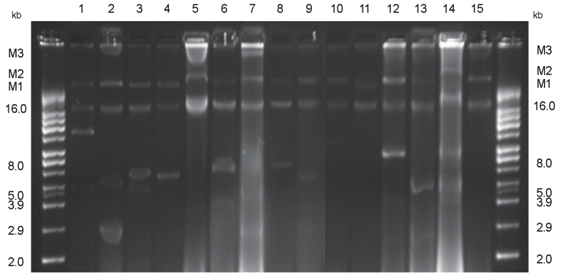
Figure 3: Profiles of plasmids isolated from UPEC strains (Lanes 1-15).Lane 1, strain CFT097, lane 2, strain CFT429, lane 3, strain F15, lane 4,strain CPZ 421, lane 5, CPZ 426, lane 6, CPZ 427, Lane 7, strain CPZ529,lane 8, strain CPZ542, lane 9, CPZ609, lane 10, CFT450, lane 11, strain
54, lane 12, CFT428, lane 13, CFT375, Lane 14, CFT149, lane 15, CFT434
Horizontal Transfer of β-lactam-Resistance Phenotypes
and Genotypes
Transconjugants were only obtained with Salmonella strain
942 as recipient. No transconjugants were obtained when
Salmonella strain 909 was used as a recipient. All transconjugants
were resistant to ampicillin (256 μg/mL) and tetracycline
(15 μg/mL). Template DNA from twenty five transconjugants
was screened for the 11 β-lactamase-resistance genes. The
oligonucleotide primers specific for the amplification of blatem
amplified the 851-bp region of the gene from the template DNA
of all 25 transconjugants. Similarly, the oligonucleotide primers
specific for the amplification of blaCTX-m amplified the 550-bp
region of the gene from the template DNA of all 25 transconjugants.
No other β-lactam-resistance genes were amplified from the
template DNA of the transconjugants. The template DNA from the
25 transconjugants was typed using the PCR-based replicon assay
(Table 2). Oligonucleotide primers specific for the amplification
of the I1 plasmid replicon successfully amplified a 139-bp region
of the replicon from the template DNA of 21 of the 25 (84.0%)
isolates. Similarly, primers specific for the amplification of the
B/O plasmid replicon successfully amplified a 159-bp region of
the replicon from the template DNA of 22/25 isolates (88.0%).
FIA plasmid-specific primers failed to amplify the 469-bp
region of the replicon from the template DNA of any of the 25
transconjugants.
Pulsed Field Gel Electrophoresis (PFGE)
All 24 β-lactam resistant UPECs were typeable by the
PFGE methodology used. XbaI–PFGE identified 16 distinct
macrorestriction patterns (mrps) among the 24 UPEC strains
(Figure 4). Dendrogram analysis indicated that the XbaIdigested
profile of CFT449, which was resistant to tetracycline,
doxycycline, ampicillin and penicillin, had a identical similarity
index of 85.0% with the Xba-I digested profile of F54, which
was only resistant to ampicillin and penicillin. Similarly, the
restriction profile of strain CFT450, which was resistant to
five different antibiotics (tetracycline, doxycycline, ampicillin,
streptomycin and penicillin), had an approximately 80%
similarity index to the restriction patterns of strains CFT449 and
F54. The Xba-I restriction profile of strain CFT108, which was
resistant to tetracycline, doxycycline, kanamycin, streptomycin,
ampicillin and penicillin had a 67.0% similarity index with strain
F5, which was resistant to tetracycline, doxycycline, ampicillin,
streptomycin and penicillin and strain CFT097 which was
resistant to streptomycin and penicillin. The restriction profiles
of other strains had a similarity index of less than 65.0%.

Figure 4: XbaI pulsed field gel electrophoresis (PFGE) of the genomic DNA of uropathogenic strains and a dendrogram analysis of the macrorestriction patterns by the Bionumeric software. Strains were resistant to the following antibiotics: AM, ampicillin; P, penicillin; T, tetracycline, D, doxycycline, C,chloramphenicol, K, kanamycin, S, streptomycin; TMP, trimethoprim
Discussion
Extended spectrum β-lactamases (ESBLs) are enzymes
conferring broad resistance to β-lactam antibiotics. More than
300 variants of ESBLs have been described to date in numerous
species of Gram-negative bacteria [5, 7, and 19]. A majority of
ESBLs belong to the TEM and SHV families [7, 19]. The ESBL
genes are usually plasmid-mediated and their gene products are
known to hydrolyze and inactivate a wide variety of β-lactams,
such as third-generation cephalosporins, penicillins, ampicillins
and aztreonams. Indeed, these two resistance determinants are
widely prevalent in most ESBL-resistant E. coli and K. pneumoniae
and to a lesser extent on other genera of Enterobacteriaceae [5, 7,
and 19]. These studies also indicate that blatem is responsible for
up to 90.0% of ampicillin and penicillin resistance. The molecular
screening for 11 different β-lactam resistance genes in the
template DNA of the 24 multiple antibiotic-resistant isolates in
this study indicates the presence of blatem in the template DNA of
all isolates. However, blashv was absent. Our results also indicate
that the template DNA from 84.0% of the isolates in this study
harbored the blaCTX-m gene. CTX-M type ESBLs are a new family
of plasmid mediated ESBLs originally reported in Salmonella [20,
21]. CTX-M β-lactamases constitute a rapidly growing family with
six groups and more than 50 allotypes [7, 19]. Recently, CTX-M
phentotypes have also been reported in E. coli strains isolated
from healthy humans, livestock, companion animals, food
products, and sewage, indicating the magnitude of the reservoirs
harboring and disseminating these ESBLs [20, 21].
We correlated the MIC values for penicillin and ampicillin in
each UPEC isolate in this study with the occurrence of blatem and
blaCTX-m in these isolates (Table 3). Our data indicate that thirtythree
percent of the isolates had an MIC of 16-32 μg/mL for
penicillin and 2-4 μg/mL for ampicillin. PCR data on the presence
of blatem or blaCTX-min these isolates indicated the presence of
either one of the genes in the template DNA of these isolates.
None of these isolates were found to simultaneously harbor both
genes. However, 66.0% of the UPEC strains examined in this study
had an MIC of 256 μg/mL for both ampicillin and penicillin. These
isolates harbored blatem and blaCTX-msimultaneously. It is possible
that simultaneous occurrence of two or more ESBL genes may be
necessary for higher MIC values in these isolates.
Table 3: Relationship of the Minimum inhibitory concentration (MIC)
to the presence of β-lactamase genes.
No. of E. coli strains |
MIC(µg/mL) |
Presence/Absence of |
Amp |
PCN |
blaTEM |
blaCTX-M |
2 |
2 |
16 |
+ |
- |
2 |
3 |
16 |
+ |
- |
2 |
3 |
24 |
+ |
- |
1 |
4 |
24 |
+ |
- |
1 |
4 |
32 |
+ |
- |
16 |
256 |
256 |
+ |
+ |
The majority of UPEC strains in this study harbored
plasmids of different sizes and from different plasmid families,
as determined by PBRT. Johnson et al analyzed over 200 UPEC
strains and indicated that plasmid replicon type Frep was the
most prevalent plasmid type occurring in more than 73% of the
UPEC strains followed by FIB (56. 0)%, B/O (24.0%), I1 and FIA
were present in 6.6 and 1.5% of the isolates, respectively [19].
However, the function of none of these plasmid replicons in these
strains were not determined. Results from our investigation
indicate that I1 is the dominant plasmid replicon found to
occur in 79.0% of the strains, followed by FIA in 75.0% of the
isolates respectively. Our investigation also documented that I1
and B/O plasmid replicons harbor the β-lactam resistance and
they were transferable to sensitive enteric strains of Salmonella
by conjugation. Our investigation may be the first of its kind to
document that these two plasmid replicons may be carriers of
β-lactam resistant genes in UPEC strains.
The 24 β-lactam resistant UPECs can be divided into six
different groups based on their antibiotic resistance profiles,
21 different groups based on plasmid profiles, and 16 distinct
profiles based on the PFGE mrps. These results indicate that the
spread of β-lactam resistant UPECs in these clinical ecosystems
was not due to the prevalence of a single clone. It is possible that
horizontal transfer of plasmids containing blatem and blaCTX-mmay
play a vital role in the spread of these resistance determinants in
clinical ecosystems.
The occurrence and prevalence of multidrug resistant UPECs
is a huge burden for millions of people and the healthcare system
[6]. Additionally, the prevalence and treatment of ESBL UPEC
could add to the financial burden for millions of individuals and
present a major challenge to the clinical management of UTI. The
development and spread of ESBLs in the clinical environment is
probably due to the misuse of β-lactams in healthcare facilities,
due to the horizontal transmission of these genes among enteric
bacteria [11, 22]. Furthermore, the dissemination of plasmids
harboring these resistance genes may become a public health
issue [8, 23 and 24]. Thus the ability to monitor and screen
plasmids and their resistance determinants by molecular
methods may be helpful in furthering our knowledge of the
horizontal dissemination of these molecular determinants and
the spread of antibiotic resistance genes. Lastly, prudent use of
antibiotics and better understanding of the underlying molecular
mechanisms of resistance should limit their prevalence.
Funding
This work was supported by the National Center for
Toxicological Research, US Food and Drug Administration (FDA);
the views presented here do not necessarily reflect those of the
USFDA.
Competing Interests
None declared.
Ethical Approval
Not required
- Barber AE, Norton JP, Spivak AM and Mulvey MA. Urinary tract infection: current and emerging management strategies. Clin Infect Dis. 2013; 57(5): 719–724. Doi: 10.1093/cid/cit284.
- Foxman B. Epidemiology of urinary tract infections: incidence, morbidity and economic costs. Am JMed. 2002; 113.
- Dielubanza EJ and Schaeffer AJ. Urinary tract infections in women. Med Clin North Am. 2011; 95(1): 27-41. Doi: 10.1016/j.mcna.2010.08.023.
- Blango MG and Mulvey MA. Persistence of uropathogenic Escherichia coli in the face of multiple antibiotics. Antimicrobial Agents and Chemotherapy. 2010; 54(5): 1855-1863. Doi:10.1128/AAC.00014-10.
- Bajaj P, Singh NS and Virdi JS. Escherichia coli β-lactamases: what really matters. Front. Microbiol. 2016; 7: 417 Doi: 10.3389/fmicb.2016.00417.
- Brown P, Ki M and Foxman B. Acute pyelonephritis among adults: cost of illness and considerations for the economic evaluation of therapy. Pharmacoeconomics 2005; 23(11): 1123-42. DOI:10.2165/00019053-200523110-00005.
- Nathisuwan S, Burgess DS and Lewis JS. Extended-spectrum beta lactamases: epidemiology, detection, and treatment. Pharmacotherapy 2001; 21(8): 920-928.
- Sturenburg E and Mack D. Extended-spectrum beta-lactamases: implications for the clinical microbiology, laboratory, therapy, and infection control. J Infect. 2003; 47(4): 273-295.
- Bush K. Alarming β-lactamase-mediated resistance in multidrug resistant Enterobacteriaceae. Curr Opin Microbiol. 2010;13(5):558-564. Doi: 10.1016/j.mib.2010.09.006.
- Carattoli A. Plasmids and spread of resistance. Int. J. Med. Microbiol 2013; 303(6-7): 298-304. Doi: 10.1016/j.ijmm.2013;02.001.
- Johnson TJ, Wannemuehler YM, Johnson SJ, Logue CM, White DC, Doekott C, etal. Plasmid replicon typing of commensal and pathogenic Escherichia coli isolates. Appl Environ Microbiol. 2007; 73(6): 1976-1983. Doi:10.1128/AEM.02171-06.
- Bauer AW, Kirby WM, Sherris JC and Turck M. Antibiotic susceptibility testing by a standardized single disk method. Am J Clin Pathol. 1966; 45(4): 493-496.
- Bae D, Cheng CM and Khan AA. Characterization of extended-spectrum β-lactamase (ESBL) producing non- typhoidal Salmonella(NTS) from imported products. Int. J. Food Microbiol. 2015; 214: 12-17. Doi:10.1016/j.ijfoodmicro.2015.07.017.
- Ponce E, Khan AA, Cheng CM, Summage-West C and Cerniglia CE. Prevalence and characterization of Salmonella enterica serovar Weltevreden from imported seafood. Food Microbiol. 2008; 25(1): 29-35 .Doi:10.1016/j.fm.2007.09.001.
- Sambrook J, Fritsch EF and Maniatis T. Molecular Cloning. A Laboratory Manual. Second ed. Cold Spring Harbor Laboratory Press, New York, USA.
- Carattoli A, Bertini A, Villa L, Falbo V, Hopkins KL and Threlfall EJ. Identification of plasmids by PCR-based replicon typing. J MicrobiolMethods. 2005; 63(3): 219-228. DOI:10.1016/j.mimet.2005.03.018.
- Tran QT, Nawaz MS, Deck J, Nguyen KT and Cerniglia CE. Plasmid-mediated quinolone resistance in Pseudomonas putida isolates from imported shrimp. Appl Environ Microbiol. 2011; 77(5)1885-1887. Doi: 10.1128/AEM.01176-10.
- Tenover FC, Arbeit RD, Goering RV, Mickelsen PA, Murray BE, Persing DH,etal. Interpreting chromosomal DNA restriction patterns produced by pulsed field gel electrophoresis: criteria for bacterial strain typing. J Clin Microbiol. 1995 ;33(9):2233-2239.
- Leonard DA, Bonomo RA and Powers RA. Class D β-lactamases: A re-appraisal after five decades. Acc. Chem. Res. 46(11): 2407-2415. Doi: 10.1021/ar300327a .
- Canton R, Gonzalez-Alba JM and Galan JC. CTX-M enzymes: origin and diffusion. Front Microbiol. 2012; 3: 110. Doi: 10.3389/fmicb.2012.00110 .
- Ferjani S, Saidani M, Ennigrou S, Hsairi M, Slim AF and Boubaker IB. Multidrug resistance and high virulence genotype in uropathogenic Escherichia coli due to diffusion of ST131 clonal group producing CTX-M-15: an emerging problem in a Tunisian hospital. Folia Microbiol (Praha). 2014; 59(3): 257-262. Doi: 10.1007/s12223-013-0292-0.
- Frost LS, Leplae R, Summers AO and Toussaint A. Mobile genetic elements: the agents of open source evolution. Nat Rev Microbiol. 2005; 3(9): 722-732. DOI:10.1038/nrmicro1235.
- Johnson TJ and Nolan LK. Pathogenomics of the virulence plasmids of Escherichia coli. Microbiol Mol Biol Rev.2009; 73 (4): 750-774. Doi:10.1128/MMBR.00015-09.
- Clinical and Laboratory Standards Institute. Development of in vitro susceptibility testing criteria and quality control parameters for veterinary antimicrobials agents; approved guidelines-second edition. Document M37-A2. Wayne, PA: CLSI, 2002.


