


Keywords : Japonica rice; Indica rice; Polyphenols; Brown rice tea
Rice (Oryza Sativa L.) is a staple food that is consumed by at least half of the world’s population at least once a day and is planted in more than 100 countries [3]. In particular, colored rice varieties have been shown to have anti-inflammatory and antioxidant properties thus making rice as a potential candidate for nutritional supplements and functional food substitutes. Bran of whole rice varieties has shown therapeutic properties due to the presence of polyphenols [4,5].
Polyphenols belong to a subclass of phytochemicals and dominate in grains, fruits and vegetables [6]. The incorporation of polyphenols into the diet through rice consumption may be a potential solution to reduce the incidence of metabolic syndrome and its associated risk factors such as obesity. Therefore, the rice breeding program is based on the development of rice varieties that not only appeal to consumers’ taste and texture characteristics, but also are rich in polyphenols with potential antioxidant and anti-inflammatory properties [7]. It is important to satisfy health-conscious consumers. The brown rice can be used as functional foods to satisfy their cooking and nutritional needs. Brown rice has potentials in resisting oxidation and antioxidants, diminishing inflammation and reducing blood lipids. This potential of rice-derived polyphenols may potentially regulate risk factors for obesity-related rice and inflammation development [8].
Rice is composed of different layers, and the outer layer is generally called the hull, which accounts for 16% to 28% the weight of rice [9]. In a process known as shelling, the hull is removed to expose the bran. The resulting product is commonly referred to as whole grain rice. Whole grain rice is the endosperm (white rice) and the bran layer is still intact [10]. Bran consists of several layers (peel, seed coat, bead and aleurone), accounting for 6%-7% the total weight of rice. Most of the polyphenols are present in these ectopic layers of the endosperm [9]. Therefore, the main objective of this research was to investigate the content and the antioxidant activity of polyphenols in baked brown rice tea.
Japonica rice was obtained from Daxie Yushu Township Panjin Daqingshan Rice Processing Factory (Liaoning, China). Indica rice was purchased from Nankou Town, Meixian District, Meizhou (Guangdong, China). Tieguanyin was purchased from Longxi Township, Anxi County, (Fujian, China), and Pu’er Tea was purchased from Yunnan Puqi Kang Tea Co., Ltd. (Yunnan, China). Burdock tea was purchased from China’s burdock village, Lanling (Shandong, China). All samples were subjected to the same post-harvest handling and storage at 4°C. Analysis of all the biological replicates was conducted in triplicate. The chemicals were of analytical reagent grade.
Preparation of Brown Rice Tea and Control Teas
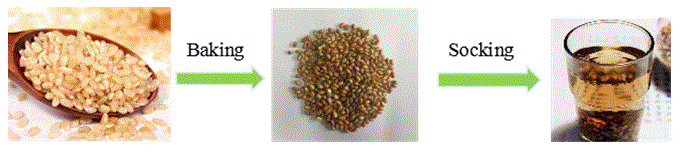
The brown rice was placed in a constant temperature oven from Nantong Huatai Experimental Instrument Co., Ltd. (Jiangsu, China) for drying. About 10 g of brown rice was weighed by an electronic balance using a 100 mL beaker, baked at 180 ℃ for 15 min, then soaked with 60 mL boiling water for 20 min. Control teas were soaked in boiling water for 20 min. As shown in Figure 1, the preparation process of brown rice tea mainly included baking, and socking.
The protein content was determined by the Kjeldahl method. A 0.5 g sample was mixed with 4 mL concentrated sulfuric acid in a 100 mL round bottom flask, and the mixture was heated to 440℃ using a conventional convection conductive heating system until boiling. However, the heating time did not exceed 3-5 min. The crude cellulose content was estimated by the method of Ahuja and Bajaj and the value was expressed as a percentage of cellulose equivalent. Amino acid analysis of rice was carried out according to the method of Du [11, 12]. Rice flour (100 mg) was hydrolyzed with 10 mL 5 mol/L NaOH at 110℃ for 20 h. The mixture was transferred and dissolved in deionized water in a 50 mL volumetric flask. However, the solution was filtered through a 0.45 μm nylon syringe filter (Filtrex Technology, Singapore). The amount of each Amino Acid (AA) was determined using an automatic amino acid analyzer (Biochrom 30+, Cambridge, UK). Amino acids were post-column derivatized with ninhydrin reagent (0-50 mL/h) and detected by absorbance at 570 nm and 440 nm. Amino acids and standard solutions were analyzed under the same conditions.
Determination of Total Phenolic Content (TPC)
The total free phenol content was determined using the method described by Qiu et al.[13]. Briefly, a 1 mL sample was incubated with 5 mL Folin-Ciocalteu reagent for 5 min in the dark. The mixture was neutralized by the addition of 4 mL 7% sodium carbonate solution and 1 mL of deionized water. After incubation for 90 min in the dark, the absorbance was measured at 765 nm against a methanol blank on a microplate reader (BMG Labtech FLUOstar Omega, Offenburg, Germany). The total phenolic content of the rice samples was expressed as mg/100 g gallic acid equivalent (GAE).
Antioxidant Activity Determination
The free radical scavenging activity was determined by 2,2-diphenyl -picrylhydrazyl (DPPH) assay. The value of DPPH represents the antioxidant capacity of a given substance compared to standard Trolox. This method is based on the decolorization of the stable free radical DPPH. When DPPH is mixed with a solution of the substance that can provide hydrogen atoms, the result produces a reduced form while losing purple to yellow color [14]. Spectrophotometric analysis was performed as published by Brand-Williams et al. [15]. To determine free radical scavenging activity, 1.45 mL DPPH colored groups were added to 50 mL diluted sample extract or Trolox (standard) in methanol. The mixture was allowed to stand in the dark at room temperature for 30 min. The absorbance was measured at 515 nm [16]. Use 0.05 mmol/L (0.0125 mg/mL) to 1 mmol/L (0.25 mg/mL) Trolox (6-hydroxy -2,5,7,8-tetramethyl -chroman-2- carboxylic acid) methanol, the solution is calibrated. The free radical scavenging activity was expressed as Trolox equivalent g per 100 g dry matter. DPPH, methanol and Trolox were purchased from French VWR.
Statistical Analysis
All experimental data were estimated in triplicate and all statistical calculations were performed using statistical analysis software Origin Lab 9.0 (Origin Lab Corporation). Significant differences (P≤0.05) among various treatments were detected by Duncan’s multiple range tests.
As shown in Table 1, the protein content (8.08%) and crude cellulose content (1.29%) of Indica brown rice were higher than those of Japonica brown rice (7.72% and 1.05%). The total AA content of Indica brown rice (7.30%) was higher than that of Japonica brown rice (6.30%). The content of Glu, Asp, Thr, Ser, and Tyr in Indica brown rice was higher than that in Japonica brown rice, respectively. In particular, the content of Thr was increased by 50%. These ensured the nutritional value of brown rice tea.
components |
Japonica rice |
Indica rice |
Moisture |
10.86 |
11.95 |
Protein |
7.72 |
8.08 |
Crude cellulose |
1.05 |
1.29 |
Asp |
0.60 |
0.70 |
Thr |
0.20 |
0.30 |
Ser |
0.30 |
0.40 |
Glu |
1.20 |
1.40 |
Gly |
0.30 |
0.30 |
Ala |
0.40 |
0.40 |
Cys |
0.00 |
0.00 |
Val |
0.40 |
0.40 |
Met |
0.20 |
0.10 |
Ile |
0.30 |
0.30 |
Leu |
0.60 |
0.60 |
Tyr |
0.30 |
0.40 |
Phe |
0.40 |
0.40 |
His |
0.20 |
0.20 |
Lys |
0.30 |
0.30 |
Arg |
0.60 |
0.60 |
Pro |
0.40 |
0.40 |
Total AA |
6.30 |
7.30 |
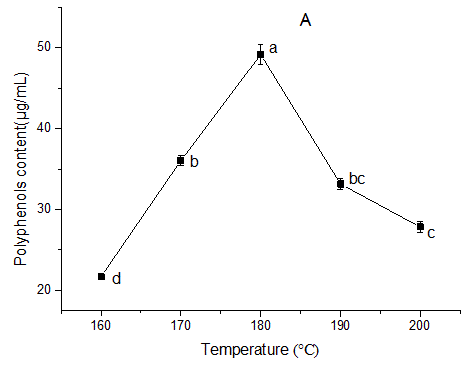
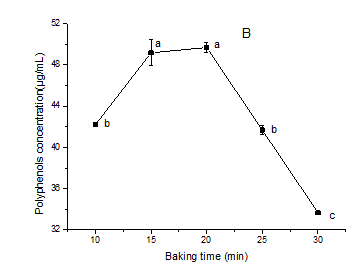
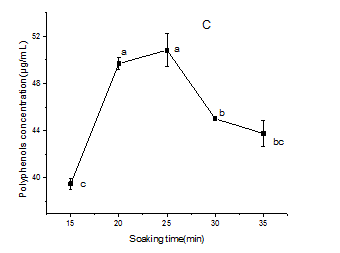
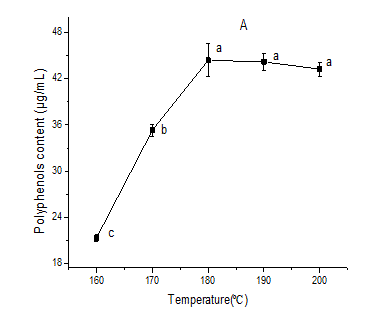
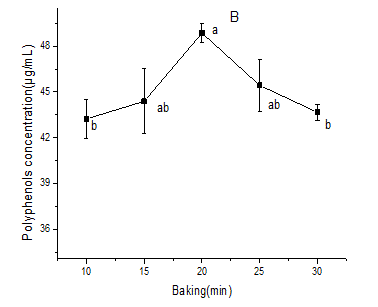
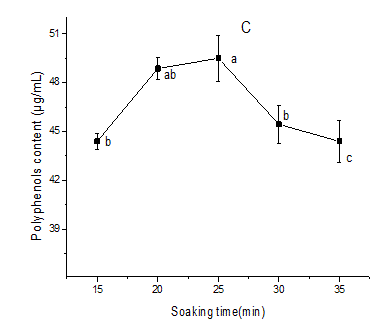
As shown in Figure 2A, under the conditions of constant baking time and soaking time, the polyphenols content in the Japonica brown rice tea rose first and then fell with the increase of baking temperature. The polyphenols content reached the highest (49.69 μg/mL) as the baking temperature was180°C. As shown in Figure 2B, under the conditions of constant baking temperature and soaking time, the polyphenols content in the brown rice tea rose first and then fell with the extension of baking time, and the polyphenols content (49.62 μg/mL) reached the highest as baking for 20 min. As shown in Figure 2C, under the conditions of constant baking temperature and baking time, the polyphenols content in the brown rice tea rose first and then fell with the immersion time, and the polyphenols content (49.78 μg/mL) reached the highest as immersing for 25 min. For Japonica brown rice, it can be seen from Figure 2A-2C that the polyphenols content in tea rose first and then fell with the increase of baking temperature, baking time and soaking time. For the baking temperature, select 170, 180, 190 °C for three levels; 180°C for the optimum baking temperature, soaking time was still 20 min, for baking time, 10 and 25 min. The polyphenols content was not different. Considering baking for 10 min, the time was a little short, some brown rice was not cooked enough, so choose 15, 20, 25 min for three levels; 180°C was the optimum baking temperature, 20 min was the optimum baking time. For the soaking time, the tea temperature was not cool at 30 min, and the tea temperature was not hot at 20 min, which was suitable for drinking tea. The selection was 20, 25, 30 min for three levels. As shown in Table 2, the polyphenols content in Japonica brown rice tea under optimal conditions by orthogonal experiment was the baking temperature is 180°C, the baking time is 15 min, and the soaking time was 30 min. Baking time is the most important factor in all treatment conditions.
Treatments |
A |
B |
C |
Polyphenols content(μg/mL) |
Temperature(°C) |
Baking time |
Soaking time(min) |
||
1 |
1(170) |
1(15) |
1(20) |
46.16±1.21 |
2 |
1 |
2(20) |
2(25) |
43.03±1.02 |
3 |
1 |
3(25) |
3(30) |
46.78±0.96 |
4 |
2(180) |
1 |
2 |
53.45±1.37 |
5 |
2 |
2 |
3 |
39.28±1.03 |
6 |
2 |
3 |
1 |
43.76±1.16 |
7 |
3(190) |
1 |
3 |
48.55±0.81 |
8 |
3 |
2 |
1 |
44.49±1.19 |
9 |
3 |
3 |
2 |
35.74±0.57 |
Laying style 1 |
0.226 |
0.239 |
0.224 |
|
Laying style 2 |
0.227 |
0.217 |
0.222 |
|
Laying style 3 |
0.219 |
0.216 |
0.225 |
|
Measures of variation |
0.008 |
0.023 |
0.003 |
Antioxidant Activity of Five Different Teas
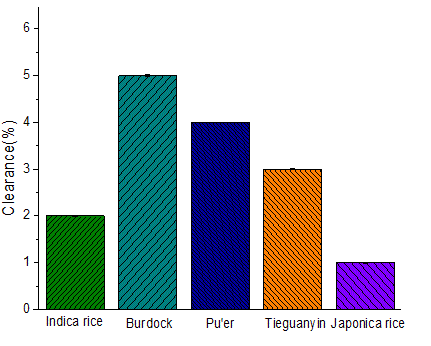
As shown in Figure 4, about the determination of the antioxidant activity of five different teas, the tea concentration of Japonica brown rice and Indica brown rice was 0.017 g/mL, and the tea concentration of Tieguanyin, Pu’er and Burdock was 0.83×10⁻³ g/mL. The DPPH clearance rate of the five samples was shown as follows: Burdock tea> Pu’er tea> Tieguanyin tea> Japonica brown rice> Indica brown rice tea. However, the DPPH clearance rate of the polyphenols in rice tea obtained from Japonica and Indica brown rice was 1.04% and 1.99%.
- DPGuh, WZhang, N Bansback, Z Amarsi, CL Birmingham, AH Anis. The incidence of co-morbidities related to obesity and overweight: a systematic review and meta-analysis. BMC Public Health. 2009;9:88. doi: 10.1186/1471-2458-9-88
- AK Kakkar, N Dahiya. Drug treatment of obesity: current status and future prospects. Eur J Intern Med. 2015;26(2):89–94.
- SMohantay. Trends in global rice consumption, Rice Today. 12(2013):44–45.
- M Candiracci, ML Justo, A Castaño, R Rodriguez-Rodriguez, MD Herrera. Antioxidant effects of anthocyanins-rich extract from black sticky rice on human erythrocytes and mononuclear leukocytes. Afr J Biotechnol. 2010;9(48):466–472.
- Manila Candiracci, Maria Luisa Justo, Angelica Castaño, Rosalia Rodriguez-Rodriguez, Maria Dolores Herrera. Rice bran enzymatic extract–supplemented diets modulate adipose tissue inflammation markers in Zucker rats. Nutrition. 2014;30(4):466-472.
- B Santhakumar, AC Bulmer, I Singh. A review of the mechanisms and effectiveness of dietary polyphenols in reducing oxidative stress and thrombotic risk. J Hum Nutr Diet. 2014;27(1):1–21.
- SW Min, SN Ryu, DH Kim. Anti-inflammatory effects of black rice, cyanidin-3-O-β-D-glycoside, and its metabolites, cyanidin and protocatechuic acid. Int Immunopharmacolo. 2010;10(8):959–966.
- ET Callcott, AB Santhakumar, JLuo, CL Blanchard. Therapeutic potential of rice-derived polyphenols on obesity-related oxidative stress and inflammation, J Appl Biomed. 2018;16(4):255–262.
- Gunaratne, K Wu, DLi, A Bentota, H Corke, YZ Cai. Antioxidant activity and nutritional quality of traditional red-grained rice varieties containing proanthocyanidins. Food Chem. 2013;138(2-3):1153–1161.
- L Kealey, W Clampett. Production of quality rice in south eastern Australia, Weed Management. Kingston, A.C.T. Rirdc, 2000.
- H Chen, TJSiebenmorgen, KGriffin. Quality characteristics of long-grain rice milled in two commercial systems, Cereal Chem. 1998;75(4):560-565.
- KL Ahuja, KL Bajaj. Colorimetric determination of crude fibre in cruciferous oilseeds. Cruciferae Newsl. 1999;21:61–62.
- PDu, X Wang, C Xu, YGao. PseAAC-Builder: A cross-platform stand-alone program for generating various special Chou’s pseudo-amino acid compositions. Anal Biochem. 2012;425(2):117–119.doi: 10.1016/j.ab.2012.03.015
- YQiu, QLiu, TBeta. Antioxidant properties of commercial wild rice and analysis of soluble and insoluble phenolic acids. Food Chem. 2010;121(1):140–147.
- P Molyneux. The use of the stable free radical diphenyl picrylhydrazyl(DPPH) for estimating antioxidant activity. Songklanakarin J Sci and Tech. 2003;26(2):211–219.
- W Brand-Williams, ME Cuvelier, C Berset. Use of a free radical method to evaluate antioxidant activity. LWT Food science and technology. 1995;28(1):25–30.
- Barba, MJ Esteve, AFrigola. Physicochemical and nutritional characteristics of blueberry juice after high pressure processing. Food Res Int. 2013;50(2):545–549.

